
How Much Irony Is Too Much Irony?
Indian popular culture has too much irony. It has turned real suffering into entertainment and made sincerity seem naive. It is time to care again.
Aditya Chauhan, 15 February 2026
In the digital bazaars of modern India, a peculiar transaction takes place daily. A young upper-middle-class audience, scrolling through their feeds, pauses to consume the spectacle of the social underclass, not with empathy, but with a smirk of detached amusement. This transaction is run by a specific currency: postmodern irony.
Once a sharp tool of political dissent, irony has metastasized into a pervasive cultural mood, a nihilistic shield that prevents sincere engagement with the world. Our culture is overfilled with it, and in its excess, it promotes a quiet malcontent, reducing human suffering to edgy entertainment. We have reached a point where the question has to be asked about its saturation point: ==how much irony is too much irony?==
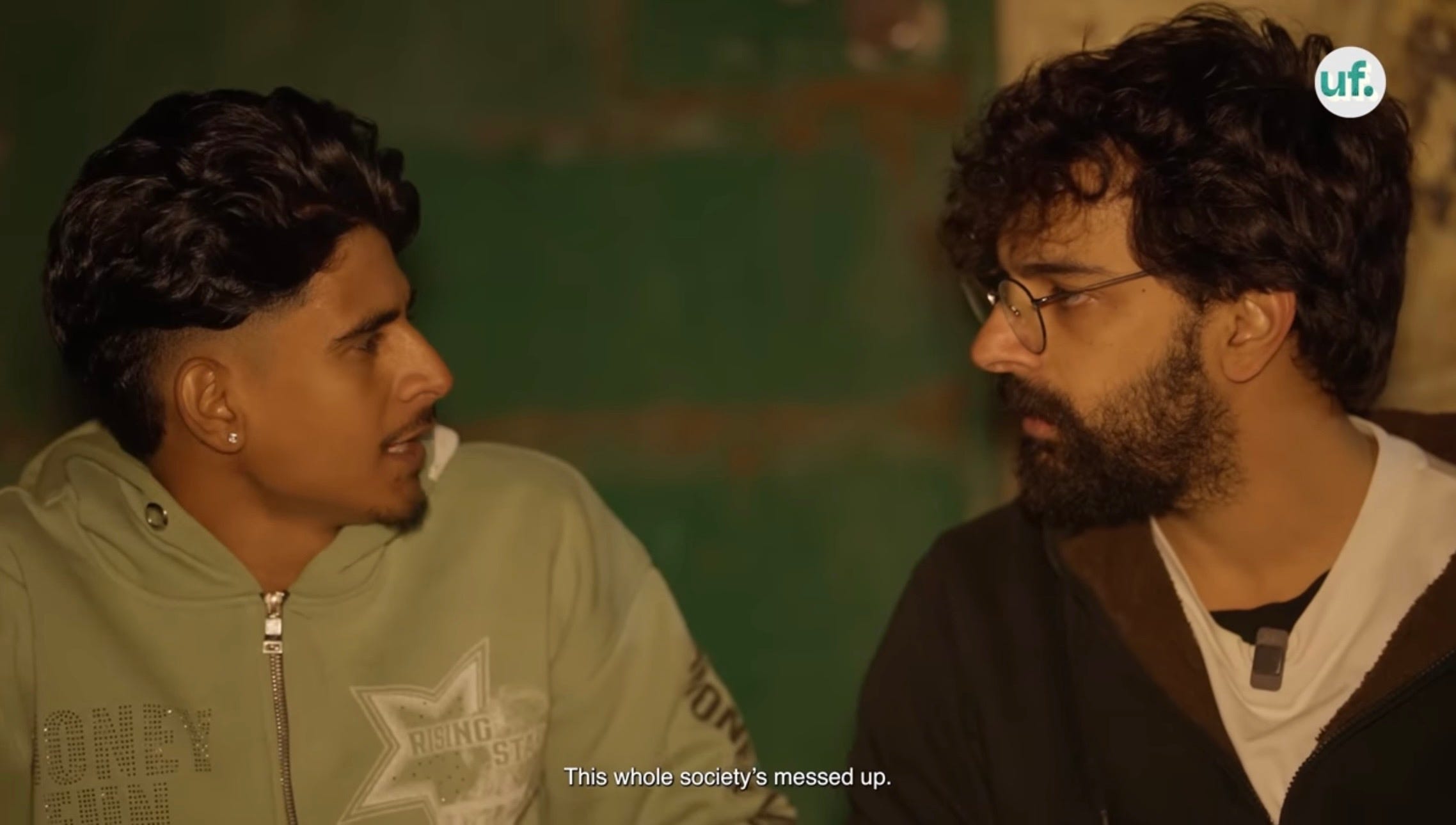
Consider the case of Aladin, the “craziest rapper from the streets of Delhi.” On 6th February, 2026, my favourite irony-maxxer YouTuber, Samdish Bhatia, posted a video featuring him. True to his channel’s name, Samdish engages in an “unfiltered” conversation with Aladin, traversing a 360-degree range of topics, from the role of religion to the kind of porn he watches.
The spectacle begins with the aesthetic: Aladin wears a hoodie with “Stop raising Studio Hoes” written. When asked about it, he explains that the word “Raand” simply matched his vibe.
Further in the interview, Aladin mentions starting smoking bidi in early childhood and moved to other substances by the 7th or 8th grade. His moral detachment extends to his view of human life; he discusses the murder of people nearby with a chilling nonchalance, suggesting a world where violence is mundane.
Perhaps most troubling is his overt objectification of women, whom he dismisses as mere sexual objects while bypassing any semblance of human connection or respect. By his own admission, he views the world through a lens of transactional gratification and street-level survival, creating a persona that is “edgy” for urban upper middle-class audience, but one that actively reinforces the most destructive cycles of society.
In another — a more sincere world — Aladin would be a deeply troubling figure. He would be a subject of concern for social workers, a statistic in a report on urban decay, or at least a cautionary tale. He would certainly not be a source of bourgeoisie entertainment. Yet, in our current cultural landscape, his interview is framed as compelling content. He is curated as a spectacle for an upper-middle-class audience that can afford to flirt with his darkness from the safe distance of a screen.
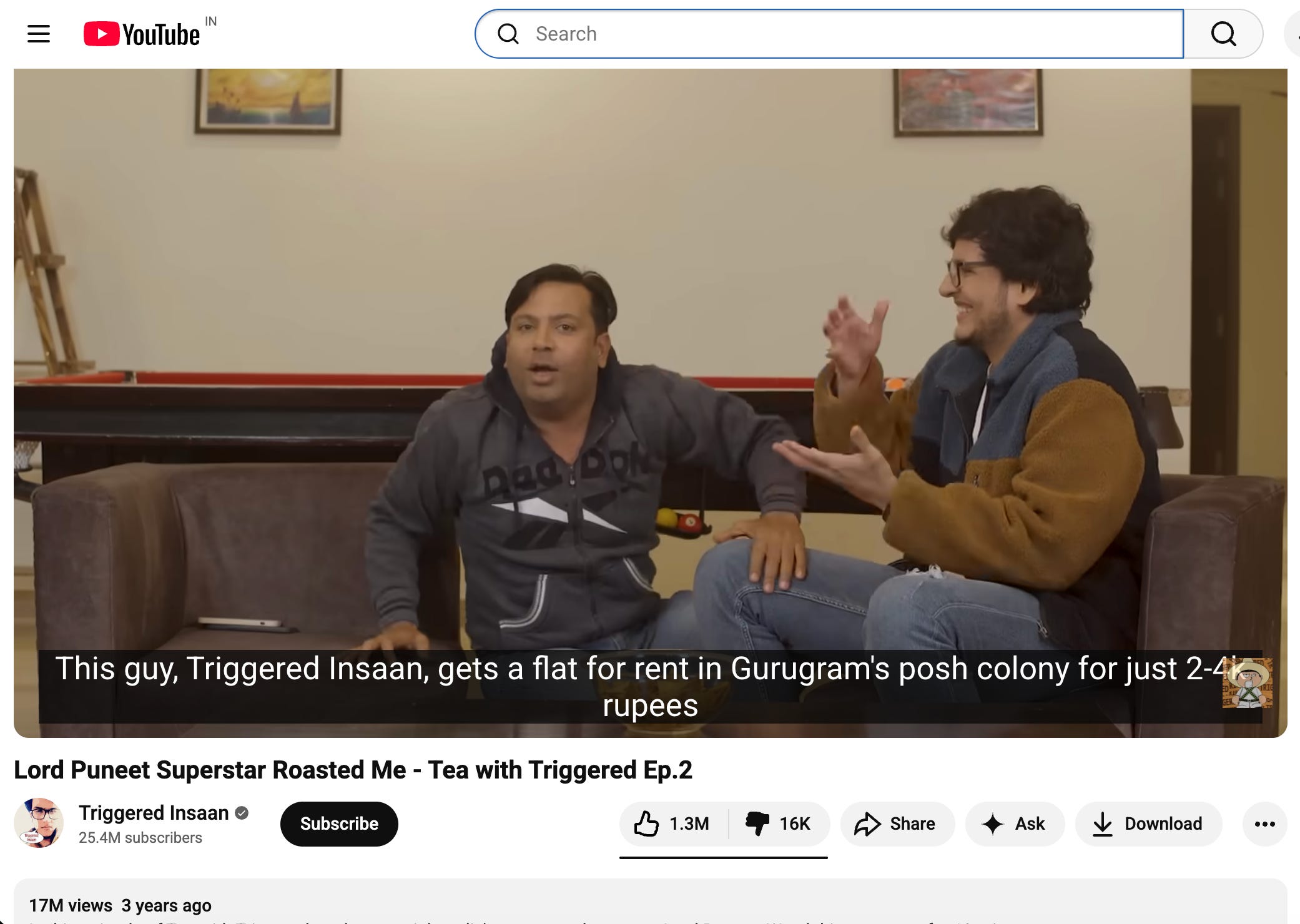
For them, his nihilism is not a tragedy but a “vibe,” an edgy aesthetic to be consumed and discarded. Aladin, along with other “ironic” characters like the ubiquitous Puneet Superstar and countless others, are made to perform a kind of monkey dance for the amusement of the classes that live securely above them. They are the jesters in the court of postmodernism, with their antics repackaged as entertainment.


This ironic gaze does not spare the political class either. Figures like Tej Pratap Yadav and Ananth Singh in Bihar have become staple content for urban audiences, their raw, unfiltered antics repackaged as comedy gold.
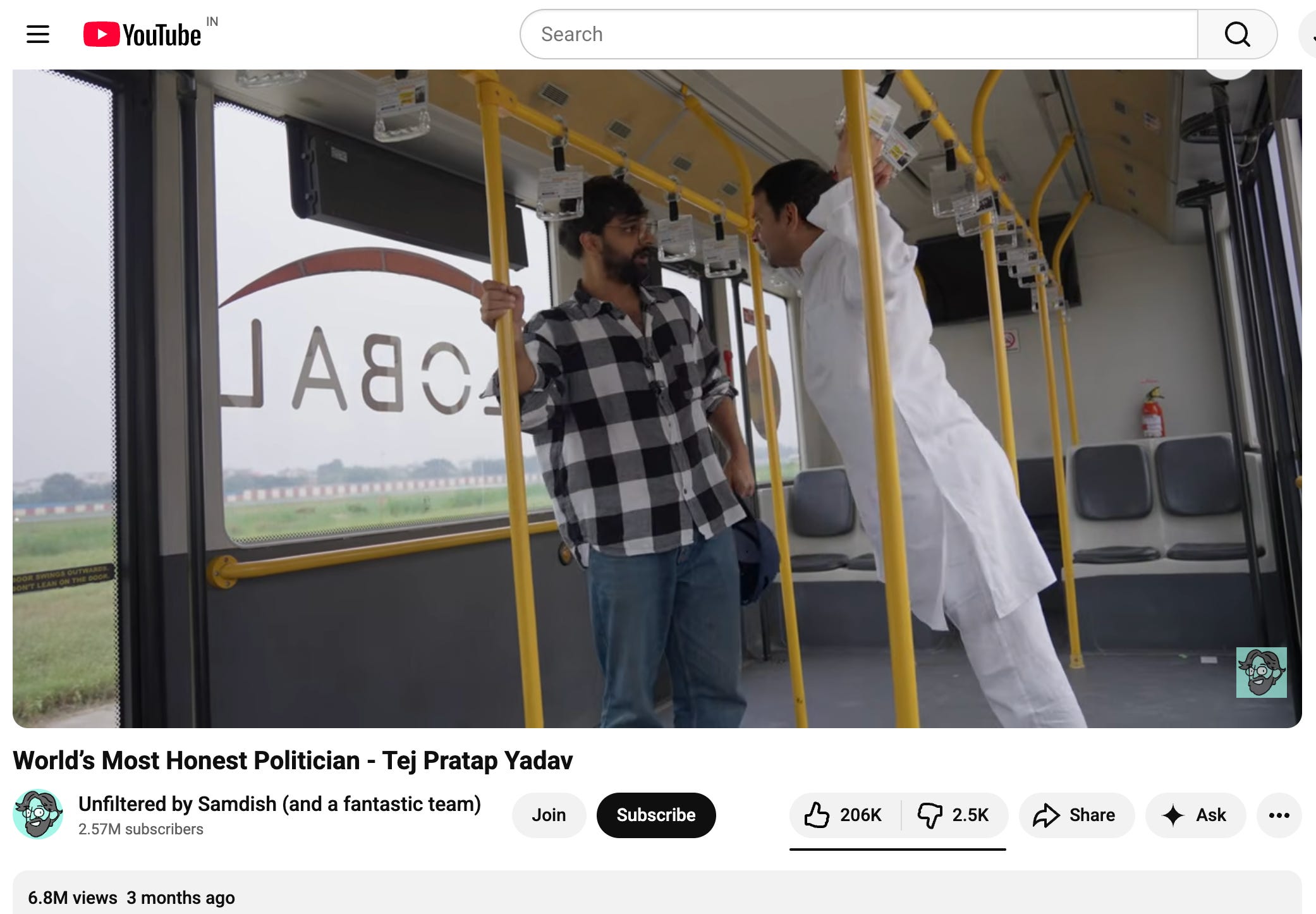
The audience watches them the same way it watches Aladin — as characters in a live-action comedy. What gets lost in this ironic framing is that these men hold actual power, that their words affect real people. In one interview, Ananth Singh threatens Newspinch journalist Abhinav Pandey during the interview that if he is killed in this very instant, then what will the Government do? The audience makes a reel out of it and posts it with “Lord Anant Singh” on top (over 3 lakh ironical likes btw).
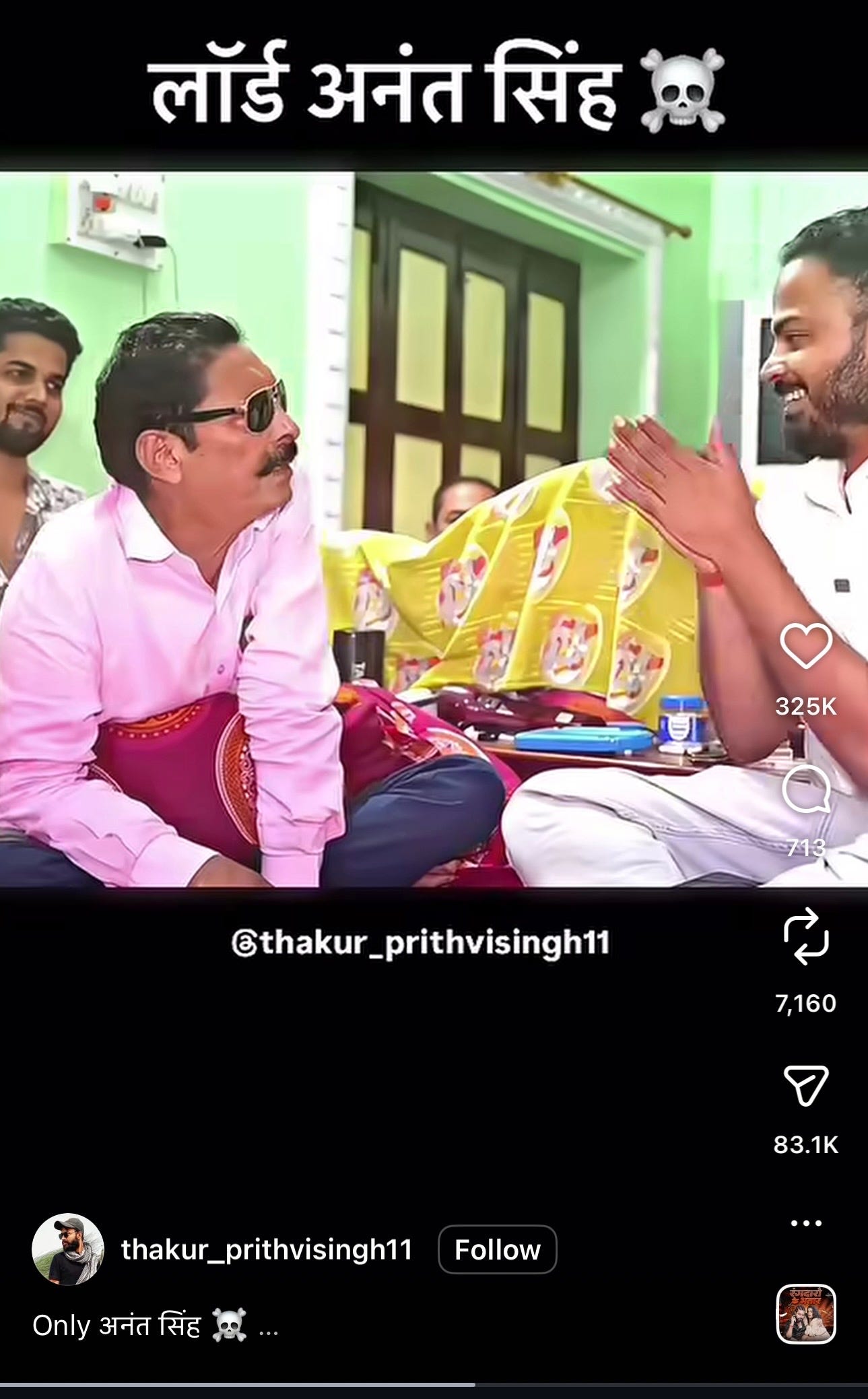
They are humanized in the worst way: made relatable, even lovable, precisely because they seem ridiculous. The irony allows viewers to feel superior to politics itself, to dismiss the whole messy business as a circus, while the clowns keep running the ring.
This dynamic represents a profound corruption of what irony was meant to be. Philosopher Ludwig Wittgenstein believed that the most serious and profound questions could be discussed only in the form of jokes. Historically, irony was a tool of the persecuted, a method of writing and speaking under the shadow of power.
As the political philosopher Leo Strauss explored in his book Persecution and the Art of Writing, thinkers facing censorship would embed their true meanings between the lines, accessible only to the discerning few. For an intellectual in a hostile environment, or a dissident under an authoritarian regime, irony was a shield and a sword. It was a way to communicate truth while protecting oneself from the consequences. ==It required a sincere belief in the truth that was being hidden; the irony was a vessel for a message, not the message itself.==
Today’s irony is different. It is not a shield for a deeper truth, but an end in itself. When an upper-middle-class viewer watches Aladin, they are not searching for a hidden critique of the system that created him. They are not learning about the failures of education, the cycle of poverty, or the lack of opportunity. They are simply enjoying the spectacle of his unvarnished reality, framed as entertainment.
The irony lies in the gap between the viewer’s life and the subject’s, a gap that is acknowledged with a smirk but never bridged with understanding. This is nihilistic because it denies the humanity of the subject and the responsibility of the viewer. It posits that nothing is serious, that every human experience is just another piece of content to be consumed.
The consequence of this pervasive irony is a societal malcontent. It breeds a cynicism that disdains any attempt at sincerity. To care too much, to be earnest, is to be naive, to be uncool. This cultural mood paralyses action. If everything is a joke, then nothing can be changed. The problems Aladin represents — poverty, addiction, nihilism — are real, but the ironic gaze prevents them from being addressed. They are simply consumed as a means of entertainment.
Years ago, someone on twitter had said that we are living in the nightmare David Foster Wallace had in 1993. In his essay “E Unibus Pluram: Television and U.S. Fiction”1, DFW saw that irony began as something valuable. It was a way for writers and artists to expose hypocrisy — to show the gap between how America pretended to be and how it actually was.
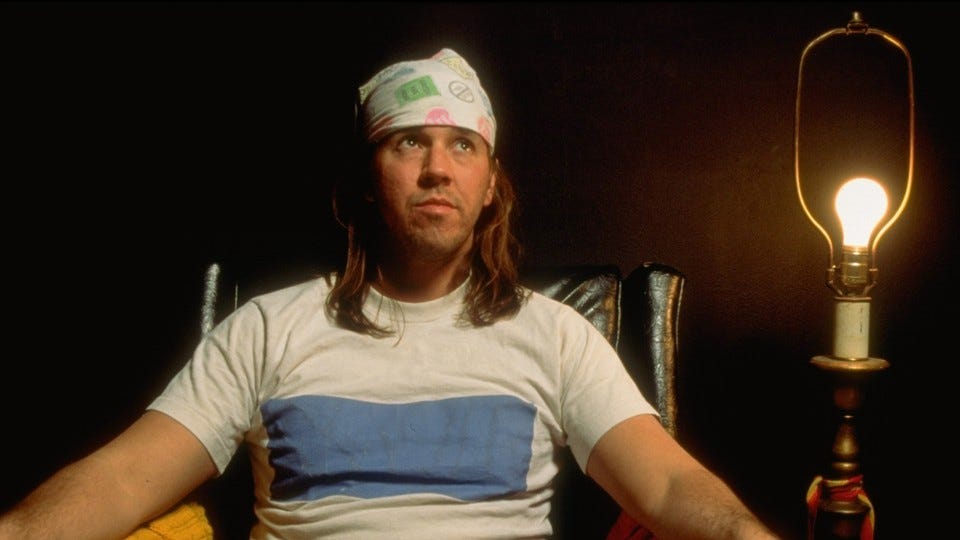
When television in the 1960s showed us perfect families and noble heroes while the real world had assassinations, war, and corruption, irony became a tool of truth-tellers. It hurt, but it helped. As Wallace puts it, irony was “a grim diagnosis of a long-denied disease,” and the people using it believed that exposing the problem could lead to a cure.
But then something strange happened. Television, the very thing irony was mocking, learned to mock itself. Commercials started making fun of commercials. Sitcoms built their laughs around clueless authority figures getting roasted by hip kids. Pepsi ran ads that were really about how successfully Pepsi had been advertised. Irony stopped being a weapon against the system and became the system’s favourite costume. Wallace argues that when irony becomes permanent — when everyone is always winking, always nudging, always refusing to mean what they say — it stops being useful and starts being a cage.
Irony has only emergency use. Carried over time, it is the voice of the trapped who have come to enjoy their cage.
The real damage, for Wallace, is that irony makes sincerity impossible. If you always speak with a smirk, you can never be pinned down. Ask an ironist what they actually believe, and you look like a fool for even asking. “The ability to interdict the question without attending to its content is tyranny,” he says. The very thing that once helped us see through lies now protects itself from any challenge. Against this, Wallace predicts that ==the next real rebels will be the ones willing to be sincere== — the ones who risk looking naive, who dare to care, who treat real human troubles with actual reverence instead of cool detachment.
~ my posts will forever remain out of paywall. but if this made you laugh, pushed you to think, or added value to your life in any possible measure, please consider buying me a chai.
Footnotes
-
David Foster Wallace, “E Unibus Pluram: Television and U.S. Fiction,” Review of Contemporary Fiction, 1993. ↩
new essays, straight to you