
An Idea Belonging to the Future
Bruno Maçães makes a persuasive case that India's spiritual tradition could shape a state of its own. The review asks whether any modern, centralised state can carry an ideal that has always lived in individual lives.
Atharva Sontakke
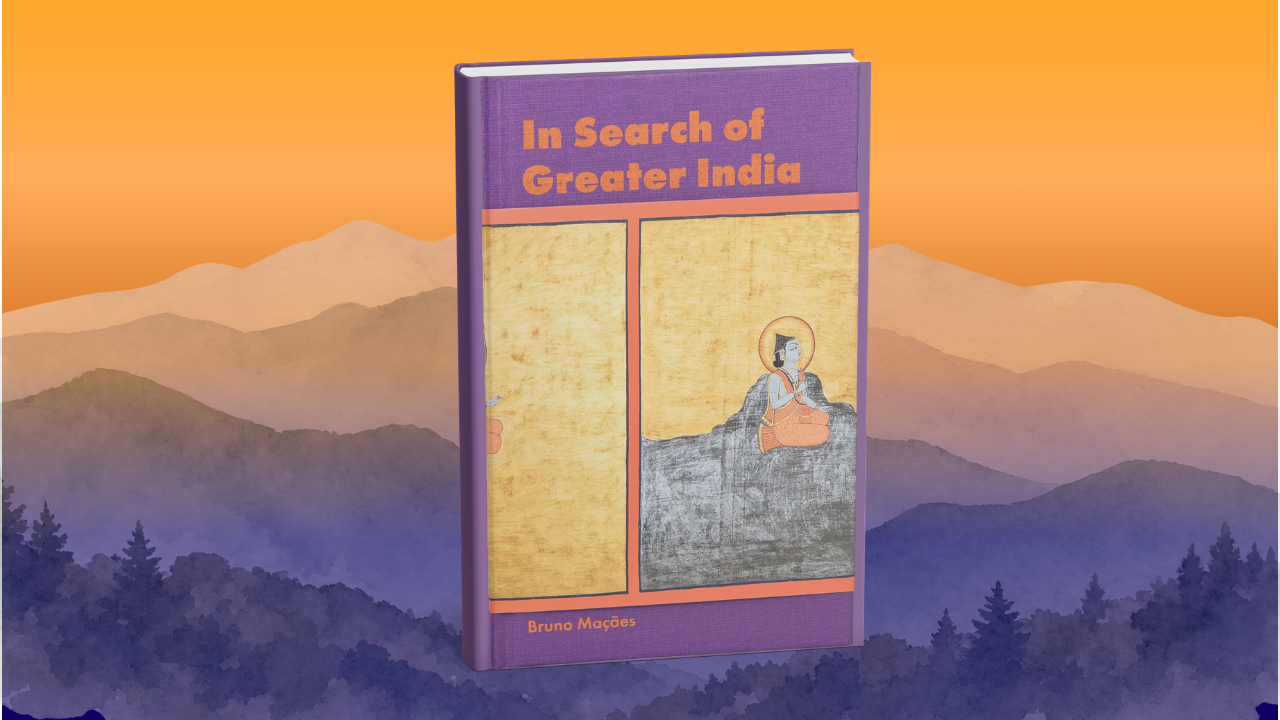
[read synopsis of In Search of Greater India by Bruno Maçães]
What if Western liberalism is not the only answer to how people should live? Maçães proposes a third model beside the liberal and the nationalist state: the civilization state, shaped by a body of ideas about human life. He tests it on Hindu thought through Vivekananda, Aurobindo and Tagore, and asks what it means for diversity, foreign policy and economics.
It is indeed an intellectually challenging endeavour to articulate the essence of an entire civilization. Yet, through a modest but stimulating journey of 108 pages, Bruno Maçães’ latest book In Search of Greater India succeeds in doing just that. Like a talented novelist who weaves together complex characters and ethical conflicts, Maçães masterfully draws upon the diverse threads of philosophy, religion, aesthetics and politics within the Hindu tradition, as well as tales of personal travel to Prayagraj, Varanasi, and Madurai to present a coherent picture of Indian civilization. To be sure, the aim of this book is not simply to extol the tradition as an object of moral piety like a child who is introduced to his dead past as an object in a museum he is expected to revere. Maçães, instead, argues that this ==Indian civilization is a living body of coherent ideas about the deepest, grandest questions of individual and collective human existence which has the potential to craft an alternative to the liberal political model through a ‘civilization state’==.
liberalism, nationalism, and civilization
Maçães opens by describing the two dominant models of the modern nation-state in the contemporary world: the liberal state and the nationalist state.
Liberalism, for him, was ‘a revolution of a purely negative character, aimed at overthrowing a system of thought without placing a new system in its place.’1 What it encouraged was ‘perpetual revolution, perpetual liberation from both the political and the natural order: liberation from religion, traditions, custom, ranks, social convention, aesthetic norms, family, hierarchy, disease, the unconscious, sexual morality, and even gender.’2 When implemented as a political program, this philosophy attempts to hold society together not on the basis of some shared goals, but the promise of gradual removal of all obstacles. ‘Even at the level of the individual, the task of living becomes that of eliminating every possible obstacle to future action, an action that, alas, never really arrives….It is possible to spend a whole life acquiring the means and resources for action that never takes place.’3
The nihilism of this project eventually takes the form of the other competing political model: the nationalist state. The nationalist state, then, becomes the site where irrational parts of the human experience, such as affinities based solely on exclusivist identities of race, religion, language, ethnicity which liberalism cannot rationally refute, eventually express themselves. It is no surprise that this form of politics has historically produced tremendous violence.4
==It is against these models that Maçães seeks to ‘defend a different vision: a world of civilization states looking for truth or justice in their own ways’.==5 He argues that just as ‘there is a connection between the empire of Alexander and Hellenism, the Maurya Empire and Buddhism, the first Chinese Empire and both Confucianism and Taoism’6 a civilization state would be one where the politics of the state are defined and shaped by a body of thought, an intellectual tradition, which provides the resources to imagine meaningful individual and collective lives. This idea of the civilization state, according to the author, is capable of avoiding the nihilistic tendencies of liberalism and exclusionary pitfalls of nationalism. ==What characterizes the civilization state is neither the endless assertion of individual autonomy shorn of any ethical anchoring, nor the sublimation of the individual through the vicariousness of a collective national identity, but instead a civilizational body of thought== which ‘has for thousands of years developed its own ways to deal with diversity and social conflict, free speech and individual happiness’.7 Maçães advances the argument for such a civilization state through a case study of the Hindu tradition in the rest of the book, a task he calls ‘the search for greater India.’8
the indian intellectual tradition
What is perhaps the most refreshing aspect of this book is that Maçães frames the idea of a civilization as a coherent body of knowledge, that is, an intellectual tradition.9 It is quite reminiscent of philosopher Alasdair MacIntyre’s description of a tradition in After Virtue as ‘an historically extended, socially embodied argument, and an argument precisely in part about the goods which constitute that tradition.’10 This framing is particularly useful as it allows us to imagine the possibility of a living tradition capable of responding to contemporary circumstances from within its own intellectual resources. Any alternative framing would be susceptible to a claim that drawing upon civilizational values and discourse is somehow a covert attempt to recreate old social forms in the present.11
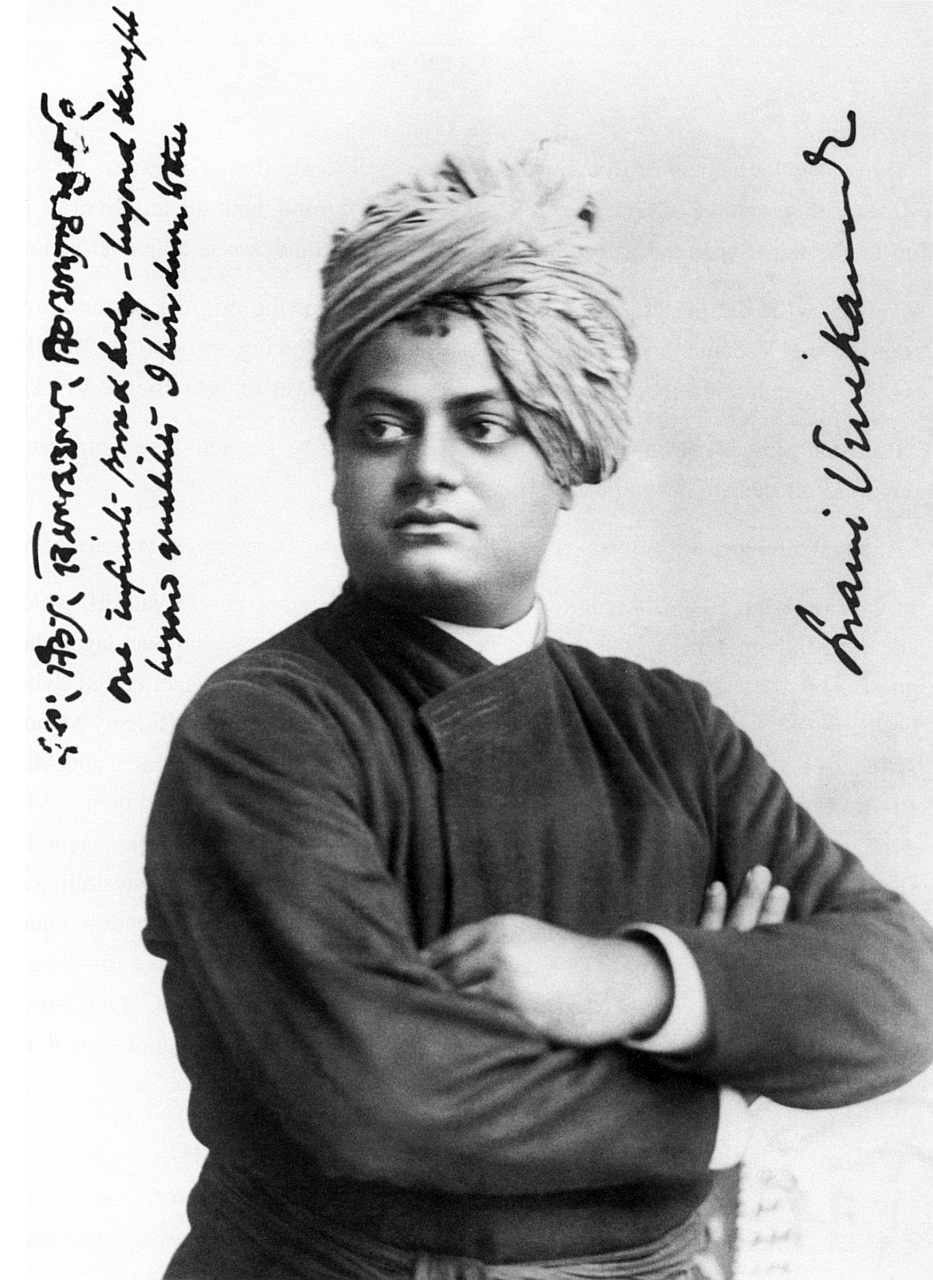
So what exactly is the Indian civilization and what intellectual tradition can be traced to this civilization? To answer this question, Maçães draws heavily from three great figures of 19th- and 20th-century India: Swami Vivekananda, Aurobindo, and Rabindranath Tagore (and also to a lesser extent Gandhi and Ananda Coomaraswamy). He argues that there is remarkable agreement among the deepest and most influential students of the Hindu civilization that the ==organizing principle of the Indian intellectual tradition is the idea of ‘spirituality’==. While the author readily admits that the term is incapable of describing the underlying idea as ‘there is no Sanskrit equivalent’ of the term, he finds the indigenous term svarāj the most suitable equivalent. Svarāj, or self-rule, is not to be confused with the agency of the ego-self, the self that we associate with our contingent personal identities. But it is the realization of the true self which liberates us from the desires and attachments of the ego-self, resulting in an inner freedom that has remained the highest ideal in the Indian tradition, as opposed to the freedom to exercise our will to conquer material nature which Maçães characterizes as the Western instinct.
Given that this highest ideal is essentially an experiential quest where spiritual practices open you up to transformative experiences, it is only logical that there are multiple acceptable paths for this process of self-transformation, in contrast to other modes of thought which are contingent on specific beliefs. This remarkable nature of the Indian intellectual tradition is precisely what makes it a coherent whole while allowing for diverse paths. In effect, a civilizational intellectual tradition can be perfectly coherent and have a distinct identity without collapsing internal diversity into an essentialist unity. For instance, what the Advaita Vedanta tradition would call a process of overcoming māyā to attain the true self, Brahman, is structurally similar to the Yogic language of overcoming saṃskāras to achieve a state of citta-vritti-nirodhaḥ (cessation of the fluctuations of the mind). These are different paths aimed at a similar process of self-transformation.
==Can this highest ideal, the quest of spiritual liberation, be the guiding principle of a civilizational state?==
crafting the civilization state
This part of the review will raise some questions about the practical consequences that follow from the conception of the civilization state. More specifically, what would it mean to translate the highest ideals of an intellectual tradition into the framework of law, politics, and policy? To be fair, Maçães himself does raise some of these questions and provides tentative answers. This review will analyse those answers and raise some questions he leaves unaddressed.
Transforming mokṣa into a ‘ruling value’: Mediating desire and liberation
How one can balance the highest ideal of liberation with the other puruṣārthas of artha (material prosperity), dharma (righteous conduct), and kāma (desire) has been a longstanding debate in the Hindu tradition. In colonial India, however, this question acquired renewed significance given that Indian civilization was confronted with modernity, where the pursuits of desire and wealth had acquired an autonomous force rendering the traditions of dharma and mokṣa mute. Arguably, Indian society continues to confront this question today and one wonders whether the civilizational state can offer a fresh perspective.
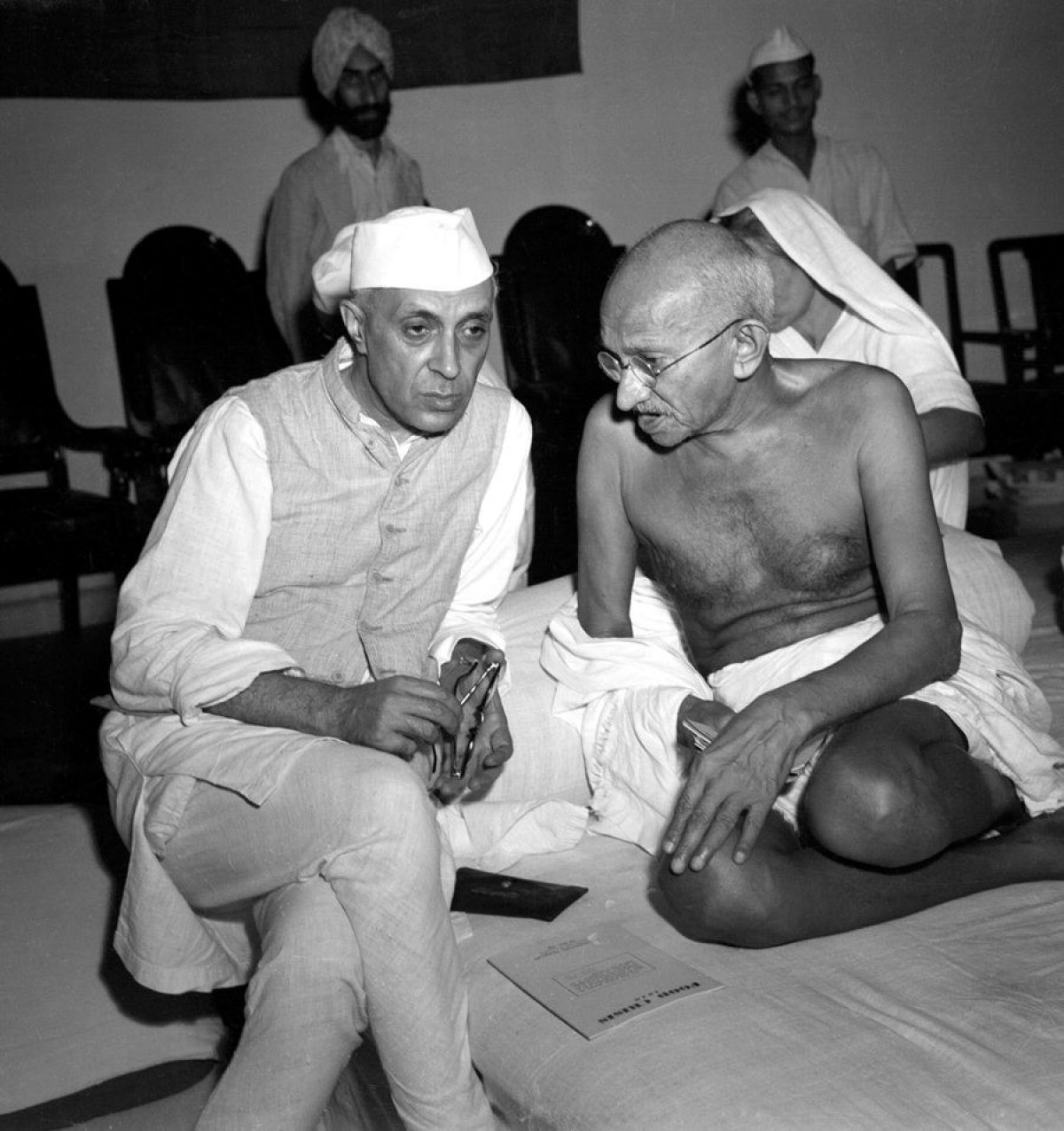
==Maçães is clear that ‘the search for spiritual truth has nothing to do with the rejection of wealth, growth, or technology’==.12 In this regard he is certainly closer to Vivekananda or Aurobindo, who sought a creative synthesis of the search for liberation through action in the world rather than through ascetic renunciation, than Gandhi, who believed that modern technology is inherently inhospitable to that spiritual quest. What this means in terms of practical state policy is the crucial question. Highlighting the exchange between Nehru and Gandhi on the question of economy, Maçães argues that the idea of swadeshi as understood by Tagore can point to a possible reconciliation. He argues that ‘the point is not to create a political economy of renunciation or asceticism, indifferent to worldly success, but to re-establish the hierarchy between the economic sphere and the intellectual and spiritual qualities with which human beings are naturally endowed.’13 Tagore viewed the Swadeshi movement in Bengal not merely as an assertion of political and economic independence but as a tool for spiritual regeneration. The call for swadeshi was not made with the exclusive intent of economic production, but for re-invigorating the dormant true self which can be awakened through creative effort. This is, in some sense, a re-engagement with the old lesson of the Bhagavad Gītā that liberation can be attained through detached action in this material world.
Framing questions of political economy in this manner is deeply Indian, in that the question of economy cannot be separated from questions of individual ethics and liberation. This integrality of the human self, at once individual as much as socially embedded, is often lost in modern social science where questions of economy, politics, ethics are bracketed into separate categories. This, however, raises a deeper question: can this particular way of thinking about the social world be sustained under contemporary conditions? In other words, can a civilization state emerge from within a modern political state at all?
Civilization State: Political or Cultural?
The discussion around political economy reveals a deeper paradox at the heart of the argument for the civilization state. If economic activity is contingent on individual ethical action, and if individual liberation is in turn dependent on individual nature, can the modern state ever find a way to create conditions hospitable to individual liberation? The modern state is a highly centralized entity which makes rules and laws and speaks a language of generalizable abstract principles of liberty, equality, and the rule of law. But the spiritual quest speaks in a different register, in the language of particular contexts and individual experiences. It is no wonder, then, that throughout the Indian tradition the king was always the upholder of dharma, never the law-giver, because dharma is individual and contextual, never reducible to abstract normative principles. Gandhi echoes exactly this in his profound revulsion for the centralized modern state. Can the civilization state, then, articulate this intuition in policy? Or is it the case that the civilization will only be restricted to the spheres of the cultural? One can only surmise that perhaps the most fundamental questions of dharma will be first felt in the space of individual life: questions of personal identity and ambitions, marriage and family. It is the domain of the cultural where conflicts of desire and liberation will play out. Whether the civilization state can be the link which brings coherence between the cultural, the social and the political remains to be seen.
Conflict or Coherence? Reconciling radical differences
Another aspect that the idea of an Indian intellectual tradition must honestly confront is whether it is possible to reconcile radically different narratives without a loss of coherence. Maçães draws principally from the tradition of Vivekananda, Aurobindo, and Tagore to build the framework of this intellectual tradition. However, one wonders to what extent Ambedkar or Nehru can be reconciled within the tradition. Ambedkar, especially, is radical in his critique of Hinduism where caste, for him, is co-extensive with Hinduism. Most other thinkers Maçães discusses hold a much more nuanced view of caste where caste-based injustice is viewed as an aberration rather than constitutive of the Indian tradition.
A different challenge comes from the other end of the political spectrum: Hindu nationalism. As Maçães notes, for Savarkar, the main concern is the identity of the nation. Who is a Hindu matters more than what is Hinduism (at least politically). However, ==the logic of the civilization state of Aurobindo, Vivekananda, and Tagore begins from individual ethics and scales up to the nation, whereas for Hindu nationalists the nation supersedes the individual==, and the identity of being Hindu colonizes the language of experience, ethics, and liberation.
In a way, both these traditions, with completely different ends, mobilize the same language of the modern nation-state. The Nehruvian/Ambedkarite tradition imagines the nation-state as a vehicle for social reform towards supposedly emancipatory ends while Hindu nationalists perceive the nation as a site for the assertion of Hindu political unity.
Reviving a failed project?
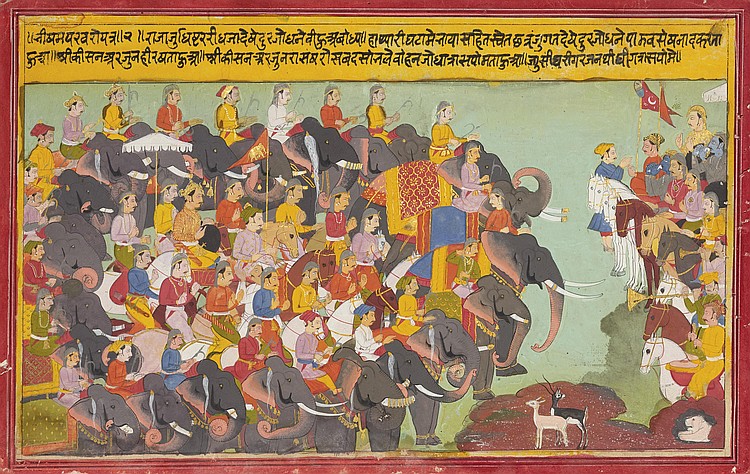
A sobering note to conclude the essay would be to honestly confront whether the project of the civilization state is a failed one. The fact of the Partition of India in 1947 was a severe refutation of the Gandhian project of Hindu-Muslim unity which he imagined was possible through syncretic engagement with both religions by emphasizing the spiritual core of those traditions. Aurobindo’s thought, though highly influential in the cultural sphere, failed to make a political impact in the process of state formation. Perhaps the ideal these luminaries presented for society was always too elevated to be realistically achieved. It is no wonder then that the Mahābhārata is tragic and uplifting in equal measure. It is an unequivocal affirmation of the possibility of liberation and yet embodies a profound and detached realism that perhaps only a few can ever attain the highest ideal, while most of us are mere fumbling participants in what Aurobindo described as the divine play of life.
Having said this, In Search of Greater India is a must-read for anyone interested in Indian culture, politics and history. None of the above comments should dissuade anyone from the project of the civilization state. It is, after all, an invitation to continue the dialogue of the Indian intellectual tradition. As the author himself suggests, this ==‘profound sense of nonfulfillment has contributed to keeping the Indian tradition alive as an idea still belonging to the future.’==14
works discussed
-
Bruno Maçães, In Search of Greater India, p. 9. ↩
-
Bruno Maçães, In Search of Greater India, p. 11. ↩
-
Bruno Maçães, In Search of Greater India, p. 14. ↩
-
Michael Mann’s The Dark Side of Democracy (Cambridge University Press, 2004) is a fascinating account of the rise of democratic nation-states, which have almost always been accompanied by ethnic violence. ↩
-
Bruno Maçães, In Search of Greater India, p. 6. ↩
-
Bruno Maçães, In Search of Greater India, p. 8. ↩
-
Bruno Maçães, In Search of Greater India, p. 24. ↩
-
Bruno Maçães, In Search of Greater India, p. 24. ↩
-
A brilliant framework for building an Indian intellectual tradition has been articulated by Lakshmi Arya Thatachar in ‘Freedom, Self and Truth: The ‘Liberty’ in Liberalism’, in R. Krishnaswamy and Atreyee Majumder (eds), Liberalism and its Encounters in India: Some Interdisciplinary Approaches (Routledge, 2023), p. 74. ↩
-
Alasdair MacIntyre, After Virtue: A Study in Moral Theory (3rd ed., University of Notre Dame Press, 2007), p. 222. ↩
-
Such claims are often made especially in the context of the debates around decolonization and decoloniality in India today. ↩
-
Bruno Maçães, In Search of Greater India, p. 99. ↩
-
Bruno Maçães, In Search of Greater India, p. 101. ↩
-
Bruno Maçães, In Search of Greater India, p. 93. ↩