
The Life and Times of Nirmal Verma
Nirmal Verma's career presents a central paradox: a masterful literary artist who revolutionized Hindi fiction by exploring individual consciousness, yet whose later political turn to cultural nationalism created a deep rift with the Left-liberal literary establishment that admired his prose.
Chandravir Dev
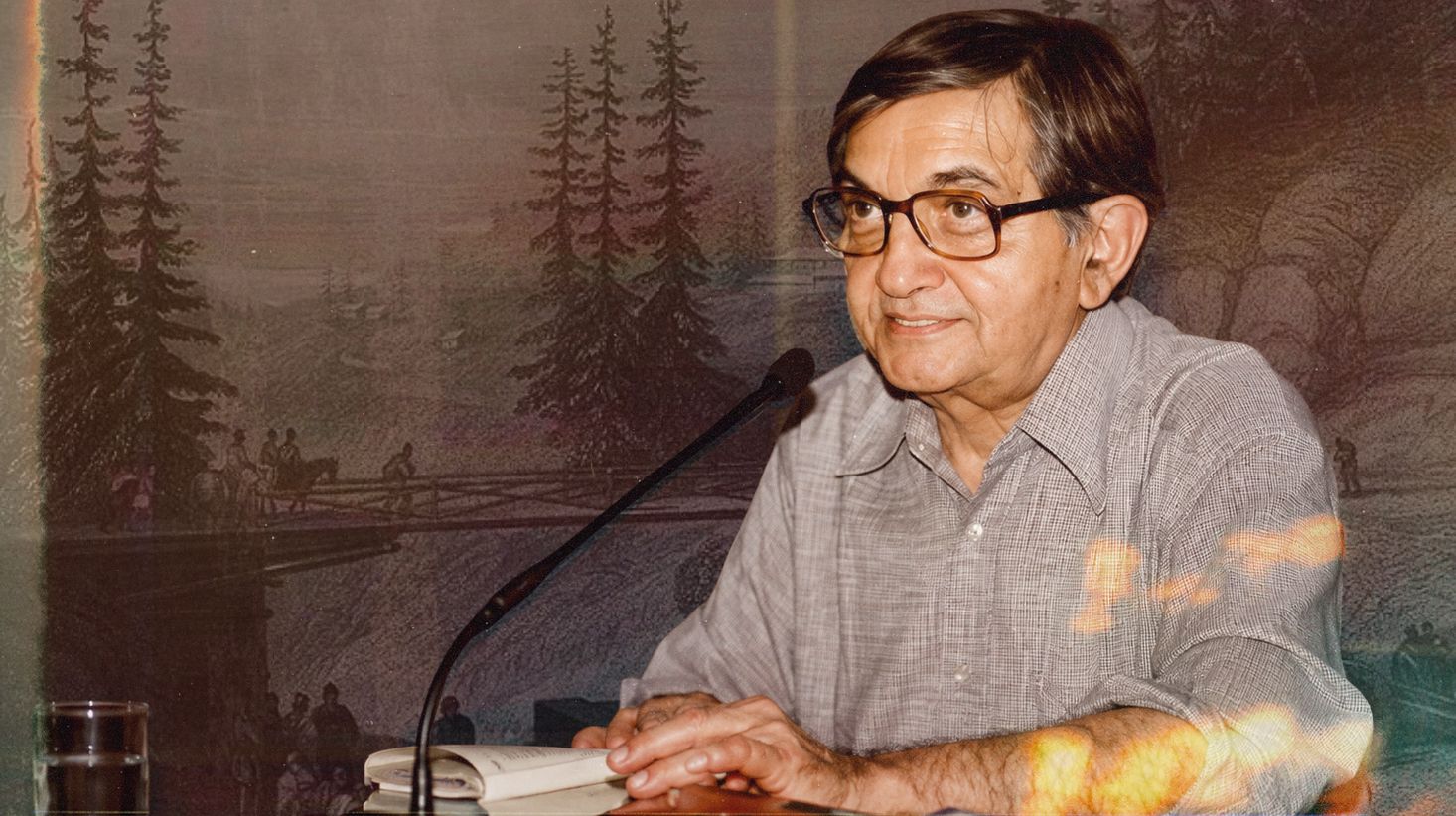
Kannadiga intellectual and Gandhian Socialist U.R. Ananthamurthy once observed that whenever a liberal grows bored, he tends to become a conservative.1 Some might argue that this observation might well apply to Nirmal Verma, the Hindi modernist writer who began his career as a committed member of the Communist Party of India in the late 1940s and early 1950s, only to embrace cultural nationalism in his later years. His intellectual journey mirrors the ideological shifts that characterized post-independence India, making him a figure of both literary brilliance and political controversy.
Born on 3 April 1929, in the hill station of Shimla, Verma’s early life was marked by academic excellence. He completed his Master of Arts at Delhi University’s prestigious St. Stephen’s College, an institution that has produced many of India’s intellectual elite. But it was his decade-long sojourn in Prague beginning in 1959 that would profoundly shape his literary sensibilities. Working as a literary translator, he immersed himself in European culture, translating works by Milan Kundera and Karel Čapek into Hindi. This European exposure, combined with his Indian roots, would create a unique literary voice that bridged two worlds.
During his time in Prague, Verma produced his first novel, Ve Din (later translated as “Days of Longing”), along with a travelogue that captured his experiences abroad. These works marked the beginning of a prolific literary career that would eventually encompass five novels, numerous short story collections, and a substantial body of essays and travelogues. Throughout his writing, Verma demonstrated a remarkable ability to explore the intricate architecture of the human soul, delving into its countless emotional and psychological nuances with exceptional artistic insight.
breaking new ground in hindi literature
The publication of Parinde (Birds) by Nirmal Verma, a collection of short stories in 1959, heralded a revolutionary moment in Hindi literature. For perhaps the first time, a Hindi writer told stories focused on the internal experiences of individual souls, free from overt social messaging. This marked a decisive break from the Premchand school of writing, where literature carried a distinct sense of social responsibility. The shift toward interiority had been foreshadowed by another legendary Hindi writer, Agyeya, whose novel “Shekhar: Ek Jivani” attempted to psychoanalyze individual consciousness. Now, Nirmal Verma was taking this exploration further.
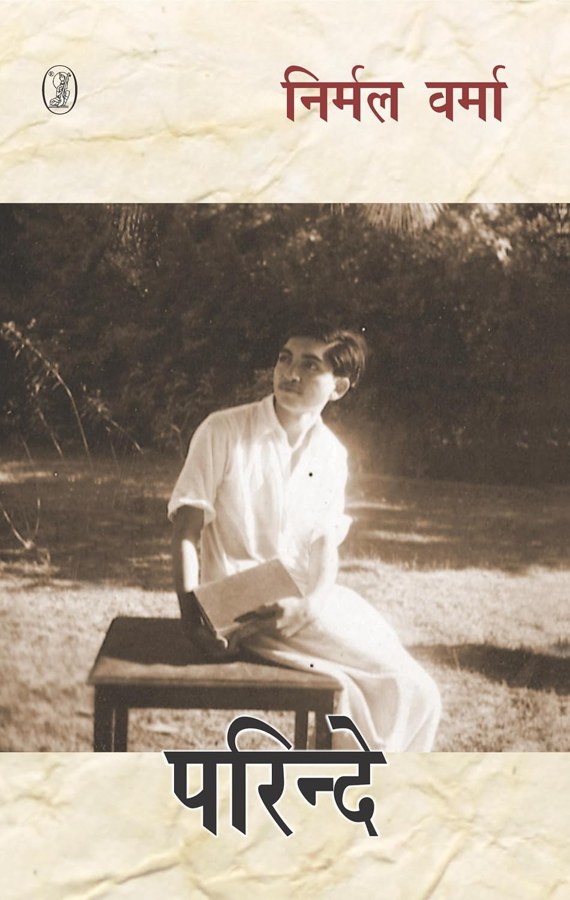
Renowned Hindi critic Namvar Singh once declared that “Parinde” established the foundations of the Nayi Kahani (New Story) movement, which drew upon the internal life of characters rather than external social realities. The title story, “Parinde,” captured the imagination of readers most profoundly. In an interview2 with poet Mangalesh Dabral, Nirmal Verma revealed that he was inspired to write this story when he heard laughter echoing through a girls’ hostel. It was an ordinary event that sparked an extraordinary act of creativity. The story depicts a woman haunted by memories of her deceased lover, her present enveloped in the fog of the past. The death of her lover and the death of desire coincide, producing an inner torment that condemns her to loneliness. The distance between self and world seems ever-growing, and the disenchantment with the world that modernity brings comes alive in her inner portrait.
What makes Verma’s work distinctive is his refusal to offer solutions. Unlike French Existentialist Philosophers of the 20th century like Jean Paul Sartre and Albert Camus, he does not propose any cohesive philosophy to solve the riddle of existence. Instead, he offers contemplative silence. It is a space where man is alone with his thoughts, pondering, ruminating, simply living. In “Parinde,” one character asks, “Sometimes, I just wonder, what is man staying alive for? Can’t he find anything better to do?” There is no answer, only the quiet acknowledgment of the question.
love, loss, and longing
It was “Ve Din” (Days of Longing), published in 1964, that established Nirmal Verma as a distinguished writer of his era. As Mohan Rakesh, Hindi writer and also one of the pioneers of the Nayi Kahani literary movement, noted in his diary3, Verma had become a discussed name, much figured in informal and formal gatherings. The novel is suffused with melancholic sensibilities about an intense but short-lived intimate relationship between an Indian migrant and an Austrian woman named Raina, who arrives in Prague already divorced.
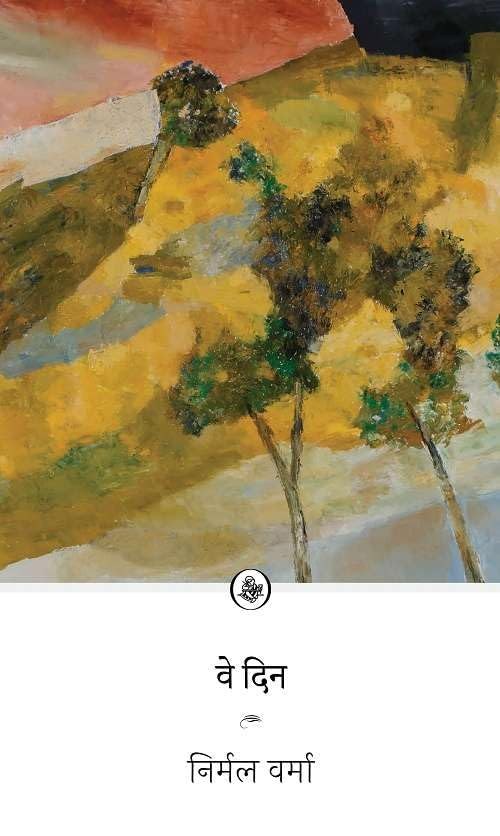
The precarious knowledge of love, something fated to die, produces a longing for something impossible to hold firmly. Nirmal Verma captures this with exquisite sensitivity:
“Suddenly one gets hold of something that wasn’t there a moment before. And now it was agitating my entire body. It wasn’t a common occurrence. It wasn’t an occurrence at all. I couldn’t have put my finger anywhere and said that was the beginning and that was the end. It was just like the joy of being.”4
The nature of time and memory comes out brilliantly in his fiction, as does the nature of love. Even when intimacy is brief, jealousy surfaces when the man becomes faintly aware of his lover’s past when she had visited Prague with her ex-husband. This feeling of acute jealousy is beyond his control. The man refuses to bow down to the mantra of modernity, where we must dissociate ourselves from pursuing any passion with gravity. ==Modern love has become a matter of conscious choice, declarations marred by indifference.== Verma attempts to rescue love, however fleeting, from these forces of modernity.
Verma’s ability to dissect loneliness with surgical precision has a Chekhovian echo that reaches its zenith in his three dramatic monologues called “Teen Ekant” (Three Texts in Solitude). In the first monologue, a divorced woman reminisces about her past while sitting in a park. She observes:
“This is the only trouble with parks. People sit in the open but cooped up within themselves! You can’t speak a word of comfort to anyone.”5
The woman lives alone, with no children, no one to share anything with. Public spaces like parks or pubs symbolize sites where one might subtract sorrows by sharing them with others who may lend an ear. Verma weaves a poetic narrative around his protagonists’ quest to search for “a patch of sunlight” (Dhoop Ka Ek Tukda). The woman’s past still haunts her. She sits daily at the local pub where her former lover used to wait for her. The emptiness of this new life is filled with old memories. There is also despair at how love marriages become hollow and end suddenly. In the modern age, a man does not feel his emptiness, he is simply indifferent towards its existence. The inner world is inconsequential to him. Love is solely situated in its outward manifestations of text messages, images, videos, social media accounts. When confronted with a breakup, he seeks to eradicate all outward appearance of his love, content with performing theatrics that satisfy his mind. ==The interior landscape of love, the possibility of feeling inner anguish at such calamity, has hardly any place in his scheme of things. Verma’s characters demonstrate that serene contemplation of the human soul might still be possible.==
the fragility of knowing another
In the second monologue, set in a tavern, we meet a man living on a pension whose wife was taken by the Nazis one day and never returned. He had been unaware of her resistance activities, which led to her arrest. The man is soon arrested as well and tortured to confess his wife’s intrigues. But his ignorance prevents betrayal, unlike what Winston did to Julia in George Orwell’s “1984”. Verma reveals that many of us lead double lives that even our partners may not know about, despite living together for years. The discovery of the inherent fragility of our knowledge of the other person is a devastating event. The man has been deprived of any explanation, since there is no possibility of her returning. Tolstoy’s maxim comes to mind: “We can know only that we know nothing. And that is the highest degree of human wisdom.”
This uncertainty and unpredictability looms everywhere in our dealings with people. We can never be certain about anything, not even death; Verma writes in his most poignant novel, “Antim Aranya” (The Last Wilderness). Even death, he warns, can deceive us at the last moment. Did we really know that person whom death took away? The interior life of the person may have been entirely different, lived away from all social appearances, when we believed we knew him. Our knowledge is always fractured; our trust, forever fragile.
confronting mortality
Loneliness is a suffocating emotion. Its excruciating nature sucks the soul out of a person. The longing that loneliness brings awakens within us a sensation for something one has difficulty deciphering with accuracy. The suffering of an individual soul and his inner anxieties longs to be heard. The articulation of suffering needs a confidant.
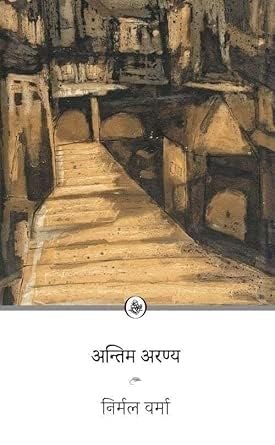
Mr. Mehra, an old man in Antim Aranya, is one such person. His wife is dead. His daughter lives in another city. Despite illness and infirmities of old age, he refuses to leave his home. “Is leaving home this easy… where he once lived with his wife?” The difficulty of reconciling oneself with loneliness perturbs Mr. Mehra’s mind. The existential dread and anguish of the past which has been lived makes him empty. He says: “I have never seen happiness, only heard of its name.”
Mr. Mehra carries guilt that he has concealed from the world. When he feels his end is near, he wishes to confess but is struck paralyzed in a way that impairs his speech. Some guilt is probably meant to go to the grave. An eternity of torment is to be borne. The incapacity to communicate one’s guilt is terribly tormenting, hastening Mr. Mehra’s death. Verma’s meditations on nostalgia, memory, and death illuminate our understanding of life. He compellingly illustrates how forces of modernity create impulses within individuals that encroach upon our soul. Memories of another person consist of no value; they’re either distorted or destroyed, since the other is no longer present. To suggest that certain memories are designed to be preserved and even esteemed within oneself is to think against the current. Nirmal Verma does precisely that.
politics and cultural identity
Nirmal Verma’s luscious prose leaves a remarkable impression on readers and critics alike. His stories and novels set across Delhi, Shimla, Prague, and London, had a rich and diverse background. This cosmopolitanism earned him the charge of being a writer with Western sensibilities. But when we enter the realm of his non-fiction works, such charges are challenged. His essays and letters bring light to his abiding concern with the question of Indianness.
India, for Verma, was a sacred land where the events and symbols from the Ramayana, Mahabharata, and Puranas populated every nook and corner. He felt that such a holy feeling of patriotism is polluted when secular historiography willingly attempts to do away with the memory of the past that Indians carry within themselves. His questioning of secularist historiography was an attempt to confront the bruised past which ought not be rejected for any devious purpose. Truth must take precedence, without which the foundations of brotherhood stand on flimsy grounds.
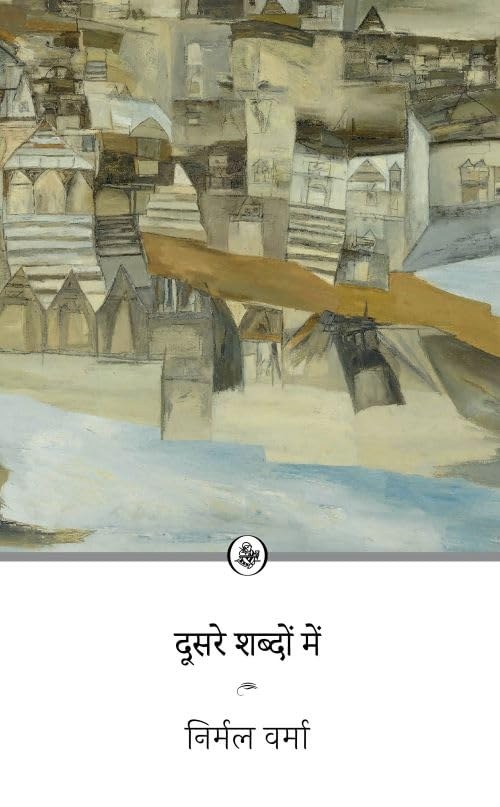
In his essay collection “Dusre Shabdon mein” (In Other Words), he wrote:
“Truth be told, the golden palace of secularism in our country has been built selectively from the bricks of these silences. When to remain silent about the past, history and myths, when to speak, they also decide according to their convenience. It is better to forget that past, when conversion was done by force, or lakhs of temples were demolished, because although this is the historical truth, even remembering it spreads ‘communal malice’; But that past must be revived when the domination of Brahmins led to class exploitation in Indian society. This second version of the past may not be historically true, but at least it can provide immediate benefits to our recipients of reservation.”6
==Verma was also disappointed with the “wave of secularism” in the aftermath of the demolition of the Babri mosque in 1992.== He wrote in a letter: “Observing the wave of secularism that has swept across the country these days — a wave in which so many of my friends have become ensnared — I am filled simultaneously with sorrow, indignation, and astonishment.”7
For Nirmal Verma, Tilak, Aurobindo, and Gandhi were the cultural icons who must be read to understand the soul of the Indian nation. The political positions that Verma espoused later in his life seemed to threaten many on the left. While the writer’s prose spellbound them, they were left disappointed by his political stances. Poet Mangalesh Dabral commented8 ==on the dilemma of those who did not like Verma’s political and cultural convictions: “This is why it is so difficult to disagree with him. You fall under the spell of this prose!”==
The political contrarian position of Verma led him to be shunned by Marxist intellectuals and virtually exiled him from the world of Hindi literature. His wife Gagan Gill recounts9 ==that his boycott started when he publicly announced that he would vote for the Bharatiya Janata Party (BJP) in 1990.== In his youth, Verma had been a Marxist. The humanist element charmed him toward the ideology. But after the invasion of Hungary by the Soviet Union in 1956, he retreated from Marxism and resigned from the party’s membership. In an interview10, he referred to Marxism as having a “one-dimensional view of life.” He also admitted how, since childhood, he was infused with a sense of faith that was transmitted via reading “Kalyan” magazines. His fictional works give a hint of his views on God in a very subtle manner:
“One night we were sitting just like this, and I asked him about God… What is He? Father remained silent for a while, then suddenly he said to me, Does this cause me any suffering… What kind of suffering? I asked him, and then he said, The absence of God’s non-existence… Not like the absence when a close relative leaves us and goes away… But ==the absence of something that has never even been seen — like the pain a mother without a child feels for not having a child!==”11
the enduring legacy
Nirmal Verma’s works are an encounter with the “naked” self, revealing inner insecurities and torments with measured poignancy. The elusive search to locate loneliness in the edges of silence seems to be the endeavor of his writings. Like that last unfinished dialogue of Mr. Mehra, his writings don’t provide a complete portrait of our world, but only a fragment which is as whole as it is not. The tyranny of time and memory is confronted with a certain gentleness in his works. The tragedies of interpersonal relationships and the isolation of individuals that result from modernity are portrayed with unmatched grace and poise.
Without succumbing to any crude notion of civilizational superiority, Verma attempts to draw a cultural framework where a sense of reverence toward the supernatural is cultivated. His works remain as relevant to us today, containing a certain degree of melancholy of modernity that stares at our lives. He passed away on 25 October, 2005, in New Delhi but his literary legacy continues to inspire readers to embark upon a journey of deep inward reflection and serene contemplation. In a world increasingly defined by surface-level engagements and digital distractions, ==Verma’s insistence on the importance of inner life, of quiet reflection, of confronting loneliness with grace, seems more urgent than ever.== His works remind us that the human soul, in all its complexity, remains a worthy subject of exploration. And perhaps the only subject worth exploring.
works discussed
-
U.R. Ananthamurthy’s remark reaches us through Vineet Gill’s Here and Hereafter: Nirmal Verma’s Life in Literature, excerpted in ThePrint, 8 October 2022. ↩
-
Nirmal Verma in conversation with the poet Mangalesh Dabral, on the writing of “Parinde”. ↩
-
Mohan Rakesh’s diaries, kept between November 1958 and November 1964, at Hindi Samay. ↩
-
Nirmal Verma, Ve Din (Rajkamal Prakashan, 1964), p. 132 — translated by Krishna Baldev Vaid as Days of Longing. ↩
-
Nirmal Verma, Teen Ekant (Radhakrishna Prakashan, 1976), p. 22 — three of his own stories adapted as stage monologues. ↩
-
Nirmal Verma, Dusre Shabdon mein (Rajkamal Prakashan, 1999), p. 162 — essays and lectures, with a section of interviews. ↩
-
Nirmal Verma, Chitthiyon ke Din, edited by Gagan Gill (Vani Prakashan, 2010), p. 90 — letters from the 1980s. ↩
-
Mangalesh Dabral on the spell of Verma’s prose, in “Roundabout: A look back at those days of Nirmal Verma”, Hindustan Times, October 2022. ↩
-
Gagan Gill on the boycott of her husband after he declared how he would vote, BBC Hindi. ↩
-
Nirmal Verma interviewed on Marxism and faith, in “In Conversation — Nirmal Verma”. ↩
-
Nirmal Verma, Antim Aranya (Rajkamal Prakashan, 2000), p. 42 — translated by Pratik Kanjilal as The Last Wilderness. ↩