
[translation]
How Can Bharatvarsh Progress?
भारतवर्ष की उन्नति कैसे हो सकती है?
the man who ate his riches
It would have been the 1870s. The deeply worried relatives of a young, yet renowned, literary figure and patron of literature complained to the Maharaja of Kashi (Varanasi), Ishwari Prasad Narayan Singh, about his extravagant lifestyle and wildly philanthropic attitude. His family was concerned that he would finish his share of their family’s fortune within a few years.
The writer was called by the King for a conversation on the matter. His ancestors had served as the royal family’s primary financiers. Hence, the two men interacted not just as monarch and subject, but as peers in the elite circles of Banaras.
“Babuā! Why are you so liberal with your purse? Don’t you want to save something for your old age?” asked the Maharaja.
‘Bharatendu’ Harishchandra famously replied, “Hujoor! My ancestors’ riches had eaten them, and now I am going to eat the riches.”
He made good on that answer: born in 1850, he inherited his share at twenty and spent it within a decade on the needy of Kashi, rare books and manuscripts, journals, theatre, schools, and impoverished writers.
The scale of his spending becomes clearer against his ancestry. His family firm, descended from Seth Aminchand, Fateh Chand, and Harsh Chand, was among northern India’s wealthiest banking and merchant houses and served as principal bankers and treasury custodians for the Banaras Raj. His great-great-grandfather Aminchand (known to the British as Omichand) was a fabulously rich Bengal financier remembered for his role before Plassey and his eventual betrayal by Robert Clive. After his downfall, the family moved to Kashi, rebuilt its fortunes as financiers to the Maharaja of Banaras, and became so trusted that the royal treasury was kept in their vaults. By the time of Bharatendu’s grandfather Harsh Chand, the family lived lavishly, parading with private guards and a martial band. The inheritance that Bharatendu would later spend so freely was therefore not ordinary wealth but the accumulated capital of a major banking dynasty.
Literature ran in the family. His father, Babu Gopal Chandra, was a noted Vaishnava scholar and poet who wrote as Girdhar Das and is credited with “Nahush Natak” (1857), often considered the first modern Hindi drama.
Influenced by him, Harishchandra composed his first Braj Bhasha couplet at the age of five, on a Vaishnava Puranic theme.
लै ब्यौढ़ा ठाढ़े भए, श्री अनिरुद्ध सुजान।
बाणासुर की सेन को, हनन लगे भगवान॥Lai byauḍhā ṭhāḍhe bhae, śrī aniruddha sujān |
Bāṇāsura kī sena ko, hanana lage bhagavān ||“The wise Shri Aniruddha stood up taking the vow/pledge (byauḍhā/bīḍā), and the Lord (Krishna) began destroying the army of Banasur.”
His father was so astonished that he included the lines in his own work and blessed him, saying he would bring glory to the family name. That prophecy was fulfilled: Bharatendu became a poet, playwright, essayist, journalist, translator, and patron whose name came to define an entire period of Hindi literary history.
His personal life was as intense as his public one. He lost his mother at five and his father at eleven, was mistreated by his stepmother, married at thirteen, and saw two of his three children die in infancy. His daughter Vidyavati Devi survived and inherited his literary and cultural interests, while his wife, Manno Devi, suffered chronic illness. The early loss of his parents and his wife’s chronic illness left him with a deep longing for affection which he fulfilled through many means. Two women in particular entered his life: Alijaan, a courtesan who had converted to Islam, whom he helped return to her original faith and renamed Madhavi; and Mallika, a Bengali widow, poetess, and collaborator who assisted him in his literary and publishing work.
He studied at Queen’s College, Banaras, but left around the time of his family journey to Puri. He knew around ten languages, including Sanskrit, Hindi, Marwari, Bengali, English, Persian, and Urdu, and translated Shakespeare into Hindi. A passionate traveller, he turned journeys such as “Saryupar Ki Yatra”, “Haridwar Ki Yatra”, “Lucknow Ki Yatra”, and “Vaidyanath Ki Yatra” into a distinct Hindi genre, using travelogue for social commentary, satire, and wit.
As a political and cultural thinker, Bharatendu used satire to expose both colonial exploitation and Indian inertia. In “Naye Zamaane ki Mukari” he mocked the false promises of modern education and, later in the same poem, attacked the police and the Englishman as smiling robbers; in “Bharat-Durdasha” he condemned economic colonialism, and in “Andher Nagari Chaupat Raja”, he created an enduring idiom of absurd authoritarian rule.
Above all, he was an institution-builder: he founded and edited journals, supported a circle of writers, established schools and associations, and patronised talent even when he ran out of his ancestors’ fortunes and had to take debt. Still, he didn’t stop his philanthropic work.
One is reminded of his play Sati Pratap in which King Dyumatsena, living in a forest hermitage, proclaims:
“My poverty pains me most only when I see a virtuous and respectable person suffering for want of money. At such a moment, I cannot help lamenting: if only I had the means today, I would assist him.”
His literary circle helped modern Hindi acquire new genres, and his proclamation “nija bhāṣā unnati ahai, saba unnati ko mūla” made the advancement of one’s own language the root of all progress. Bharatendu’s journals did more than publish literature. They helped create a Hindi-reading public that could discuss government, education, religion, economic exploitation and social reform. Honoured as “Bharatendu,” the Moon of India, he remains the central figure of the Hindi Renaissance. His 1884 lecture1 “How Can Bharatvarsh Progress?”2 is a fitting example of his fearless, witty, and still-relevant voice.
Even though the essay was written and delivered during the British era, surprisingly the lecture refuses to make colonialism an all-purpose explanation for India’s condition. Bharatendu condemns the drain of wealth and dependence on foreign goods, but directs some of his fiercest rhetoric at Indian lethargy, elite irresponsibility, social division and passive reliance upon rulers and officials.
Using the metaphor of a train that possesses high-potential carriages but lacks an engine to move them, Harishchandra contends that Indians must abandon fatalism, laziness, and passive reliance on foreign rule. A central pillar of his argument is the immediate necessity of social and religious awakening to dismantle the customs that obstruct education, unity, economic advancement or human flourishing. He sharply critiques dogmatic orthodoxy, caste rigidity, and fatalistic mindsets that fragment society and waste human potential.
Bharatendu went beyond merely diagnosing decline; through schools, journals, translations, associations and public lectures, he attempted to create the intellectual infrastructure of renewal. The central question of the speech is essentially also Jung Indien’s own: what must India learn, preserve, reform and discard in order to become an affluent civilisation without ceasing to be itself?
the ballia speech, 1884
english
It is a day of great joy that, here in the small town of Ballia, we see so many people gathered in one place with such enthusiasm. In this unfortunate, indolent country, anything that gets done is already a great deal. When nothing happens even in large cities such as Banaras, how could we fail to say that what we have seen in Ballia deserves the highest praise?
On examining the source of this enthusiasm, I found it plain that, by the good fortune of this region, the whole community is now assembled here. Wherever there is a Collector such as the esteemed Mr. Robert, why should such a society not arise? In the land and age in which God produced Akbar, He also produced Abul Fazl, Birbal, and Todar Mal. Here Mr. Robert is Akbar, while Munshi Chaturbhuj Sahay, Munshi Biharilal, and others are the Abul Fazls and Todar Mals.
Our Hindustani people are like railway carriages. First-class and second-class carriages, excellent and costly, may be coupled to a train, but none of them can move without an engine. In the same way, ==if someone will only set the people of Hindustan in motion, what can they not accomplish? Say to them only, “Why do you sit silent, O mighty one?” and then see how Hanuman remembers his strength. But who is to remind them of that strength==: the kings and princes of Hindustan, the nawabs and nobles, or the officials?
The kings and princes never find time away from their worship, their meals, and their idle tales. The officials are occupied partly by government work and partly by balls, horse races, the theatre, and newspapers. If any time remains, why should they care to waste their precious hours meeting poor, dirty, dark-skinned people like us? It comes to the same old saying: “When are you free from others, and when are we free from grief? Come, enough of meeting; neither you nor we are free.” Three frogs sat one above another. The one on top said, “Zauq, shauq” - pleasure and delight. The one in the middle said, “Gham, sum” - grief and gloom. The one at the bottom cried, “Gaye hum” - we are done for.3 That is the condition of the ordinary people of Hindustan: “We are done for.”
When the Aryans first came and settled in Hindustan, it was the duty of kings and Brahmins to spread many kinds of learning and sound policy throughout the country. Even now, if they wished, Hindustan could advance not merely every day but every moment. Yet the idleness of the whole world has overtaken these very people: “Those who understand are consumed by envy; those in power are corrupted by pride.” I cannot understand why they feel no shame. At a time when their forefathers possessed no equipment, those men sat in huts of leaves and mud in the forest, observed stars and planets through bamboo tubes, and recorded their movements so accurately that telescopes built in England at a cost of sixteen lakh rupees produce the same calculations.
Today, through English learning and the progress of the world, we have millions of books and thousands of instruments ready at hand; yet we are busy making nothing grander than carts for carrying away municipal rubbish. This is an age in which progress resembles a horse race. The Americans, the English, the French, and others gallop ahead like swift Turkish thoroughbreds. Each is determined to reach the finish-line first. Meanwhile, the Hindu Kathiawari stands still, merely pawing the earth with its hoof. Leave the others aside: are we not ashamed even when we see the Japanese ponies racing forward, panting as they run? The time is such that whoever falls behind will not catch up, even after trying ten million remedies. In this scramble, in this rain of opportunity, anyone who still holds the umbrella of misfortune above his head and keeps a blindfold of ignorance over his eyes must surely be suffering the wrath of Ishwar.
My friends asked me to say something today about how Hindustan might progress. What more can I say? There is a verse in the Bhagavata Purana: The human body, the foundation of all attainment, is rare though now obtained. It is a well-built boat; the teacher is its helmsman, and I send the favorable wind. A person who, even with all this, does not cross the ocean of worldly existence is the killer of his own Atma. Paramatma says that human birth itself is exceedingly rare. Once it has been received, there is the grace of the teacher and, beyond that, my favor. A person who receives so much assistance and still fails to cross the ocean of this world deserves to be called self-destructive. Hindustan is in precisely that condition today. ==Under English rule, we have received every kind of resource and opportunity. If we still fail to progress now, it can only be our misfortune and the wrath of God==.
Imagine a woman who, with her mother-in-law’s consent, goes by night to an empty private chamber to meet the husband she loves more than life, a husband long absent in a foreign land. If, out of shyness, she neither looks at his face nor speaks to him, her misfortune is her own; tomorrow he will leave for foreign lands again. In the same way, if under English rule we remain frogs in a well, wooden owls, or caged parrots, then our wretchedness is wretchedness upon wretchedness.
Many people will say, “Sir, the struggle to fill our stomachs leaves us no free time. How are we to make progress? Your belly is full, so you can dream of impossible things.” That is a grave mistake. England’s stomach was once just as empty. With one hand it filled its belly, while with the other it cleared the thorns from the road to progress. Are there no farmers, laborers, cart drivers, or coachmen in England? No country has a population in which every stomach is full. But while people there plough and sow a field, they also ask what new machine or method they might devise so that the field will yield twice as much grain in the future.
Even coachmen in England read newspapers. When the master steps down to visit a friend, the coachman immediately draws a newspaper from beneath his seat. A coachman here would spend that time smoking a hookah or gossiping, and even his gossip would be useless. There, people discuss the management of their country even while gossiping.
Their governing principle is that not a single moment should be wasted. Here, by contrast, the more idle a person is, the greater a gentleman he is thought to be. Laziness has grown so powerful here that Malukdas composed this couplet: “The python takes no employment; the bird performs no work. Servant Maluka has said: Rama provides for all.” Look around in every direction and you will see the numbers of those who do no work increasing everywhere. There is scarcely any honest occupation: one may flatter the rich, act as a broker, corrupt the young sons of wealthy families, or misappropriate money entrusted by someone else. Apart from these, tell me what employment exists by which a person may earn a little money. The fire of poverty burns on all sides. Someone rightly said that a poor householder struggles to preserve his honor as the modest daughter-in-law of a respectable family tries to cover her body with torn clothes. Such is the condition of Hindustan.
The census report makes it plain that the number of people here increases day by day while the amount of money diminishes day by day. We can no longer manage without a way to increase wealth, and wealth cannot increase unless intelligence increases. ==Brothers, do not keep looking toward kings and princes. Do not hope that some learned pandit, while reciting a sacred tale, will reveal a method by which the country’s wealth and intelligence can grow. Gird up your own loins and abandon laziness.== How long will you allow yourselves to be called barbarous, uncouth, ignorant, dull, and cowardly? Run! Whoever falls behind in this race will have nowhere left to stand.
“When will Rama come to Janakpur again?” If you fall behind this time, you will descend to the lowest depths. When Prithviraj was captured and taken to Ghor, someone told Ghiyasuddin, the brother of Shahabuddin, that Prithviraj was highly skilled at shooting an arrow toward a sound. An assembly was arranged, and seven iron plates were set up for him to pierce with an arrow. Prithviraj had already been blinded. The signal was that he should shoot at the plates when Ghiyasuddin said ‘Hum’. The poet Chand, who was also a prisoner with him, saw the preparations and recited this couplet: “The bow is drawn this time; who knows when it will be drawn again? O Chauhan, do not miss: with a single arrow, strike the one man.” Understanding the signal, Prithviraj fired when Ghiyasuddin said ‘Hum’ and struck Ghiyasuddin himself.4
The same is true now: the bow has been drawn this once. If, under the present government and with so many means of progress available, you still do not reform yourselves, then you are beyond help. ==Reform must mean progress in every respect: in religion, in work at home and outside it, in occupations, manners, conduct, physical strength, strength of mind, and social life; among children, young people, and the old; among women and men; among rich and poor; in every condition, community, and region of India.== Abandon everything that places a thorn in this path, whether people call you useless or shameless, Christian or corrupt. Look only at the wretched condition of your country, and do not listen to them.
Let dishonor stand before you and honor remain behind. The wise person should accomplish his task, for to let the work be destroyed is folly.
Those who call themselves friends of the country must rise, girded for action, sacrificing their comfort and offering up their wealth and reputation. Once a few lead by example, everyone will follow within a short time. Search for the root causes of your failings. Some hide behind religion, some behind the customs of the country, and some behind comfort. Drag those thieves out from every hiding place. Bind them and imprison them. What more can I say? ==If a man came into your home to commit adultery, you would seize and beat him in anger and, to the extent of your power, destroy him. In the same way, dig out by the roots and throw away everything that now forms a thorn on your road to progress.== Do not be afraid. Until one or two hundred people are disgraced, expelled from their caste, impoverished, imprisoned, or even killed, no country will reform.
You may now ask, “Brother, we do not even know what “progress” and “reform” really mean. What should we consider good? What should we adopt, and what should we discard?” I will therefore tell you a few things that come quickly to mind. Listen.
==Dharma is the root of every kind of progress, so Dharma should be reformed first.== See how closely religion and statecraft are joined among the English, and how they advance day by day. Leave them aside and look at your own society. Beneath the covering of Dharma, your traditions contain many forms of public policy, social organization, and medicine. Consider a few examples.
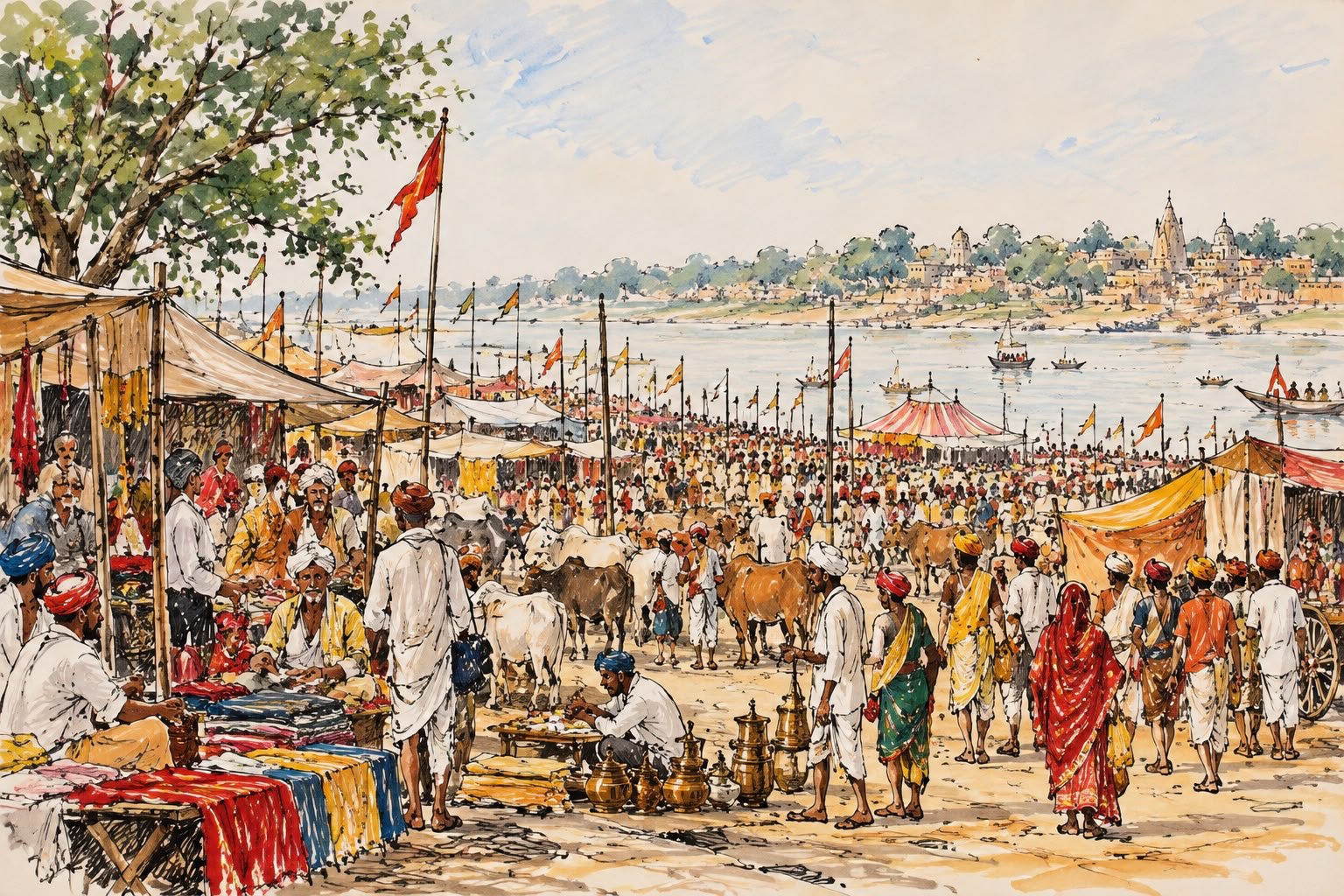
Why were the fair at Ballia and the practice of bathing here established? So that people who would otherwise never meet might travel five or ten kos,5 gather in one place once a year, meet one another, learn of one another’s joys and sorrows, and buy household articles unavailable in their villages. Why was the Ekadashi fast established? So fasting once or twice each month might cleanse the body. When you go to bathe in the Ganges, why are you instructed to pour water first over your head and only then place your feet in the river? So that heat from the soles does not rise to the head and cause illness. Diwali exists so that, on this pretext, a thorough cleaning takes place at least once a year. Holi exists so that fires lit in many places may cleanse the unhealthy air of spring. Your festivals are, in effect, your municipalities. Every festival, pilgrimage, and fast contains some practical wisdom.
The sages blended religious policy and social policy as thoroughly as milk and water. ==The trouble that arose later was that people failed to understand why the sages prescribed these religious observances, and began to regard the observances themselves as true religion.== Brothers, true religion consists only in Bhajan at the lotus feet of Parameshwar. All these other practices belong to social religion and may be examined and changed according to place and time.
A second trouble arose when descendants of those great and intelligent sages failed to understand their ancestors’ intentions, invented many new religious duties, and inserted them into the scriptures. Every date became a fast and every place became a pilgrimage site. Open your eyes, examine these matters again, and understand why those wise sages established each practice. Accept what suits the time and place and benefits society. Put into practice the many things that society regards as improper even though Dharmashastra permits them, such as sea travel and widow remarriage. Do not marry boys in childhood and thereby diminish their strength, vitality, and length of life. Are you their parents or their enemies? Allow their bodies to mature. Allow them to obtain some education. Let them acquire enough judgment to concern themselves with salt, oil, and firewood - the ordinary responsibilities of a household - and only then place their feet in the wooden stocks of marriage.
Abolish the Kulin system6 and polygamy. Educate girls as well, though not in the manner now in fashion, which causes harm instead of benefit. Educate them so that they learn the duties of their country and family, remain devoted to their husbands, and can easily educate their children. Vaishnavas, Shaktas, and the followers of other sects must abandon their mutual hostility. This is no time for such disputes. Hindus, Jains, and Muslims must come together. Whether a person is considered high or low in caste, respect everyone and judge each person according to merit. ==Do not wound people of the lower castes by treating them with contempt. All must unite.==
Our Muslim brothers, too, should cease to regard Hindus as inferior while living in Hindustan. They should treat Hindus as true brothers and avoid actions that cause them pain. When a house catches fire, elder and younger sisters-in-law must set aside their jealousy and put out the fire together. Through the influence of their religion, Muslims already possess with ease what Hindus cannot obtain: they have no caste divisions, no ritual restrictions around the kitchen and dining, and no prohibition against traveling to England. Yet it is deeply regrettable that Muslims have still done little to improve their condition. Many seem to imagine that the imperial courts of Delhi and Lucknow still survive. Friends, those days are gone. Abandon laziness and obstinacy.
Run beside the Hindus; one and one will make two. Cast aside the old habits. Do not ruin boys from childhood by making them read Mir Hasan’s ‘Masnavi’ and ‘Indar Sabha’. No sooner have they mastered the elementary primer than they put on tight clothes and begin humming a ghazal: “Śauq tiflī se mujhe gul kī jo dīdār kā thā, na kiyā hamne gulistā̃ kā sabaq yād kabhī” (From childhood I longed for the sight of the rose; I never learned a single lesson from the rose garden). Think: if boys are raised in this condition, why would they not go astray when they grow up? Do not even let them touch such books. Give them the best education possible. Stop depending upon pensions, stipends, or salaried posts. Teach boys a trade. Send them to England. Accustom them to hard work from childhood. Do not raise them in palatial indulgence and show them a path that leaves them ignorant of the world.
Hindu brothers, you too must give up your insistence upon competing doctrines and increase your love for one another. Repeat this great mantra: whoever lives in Hindustan, whatever his color or caste, is a Hindu - an inhabitant of this land.7 Help every such Hindu. Bengalis, Marathas, Punjabis, people of Madras, followers of the Vedas, Jains, Brahmos, and Muslims: take one another by the hand. Develop crafts and industries so that your wealth remains in your own country. See how, just as the Ganges divides into a thousand streams and enters the sea, your goddess of wealth flows by a thousand channels to England, France, Germany, and America. Even so trivial an article as a matchstick comes from abroad. Look at yourselves. The coarse cotton dhoti you wear was made in America. The longcloth tunic on your body came from England. You comb your hair with a French comb, while a German tallow candle burns before you.
It recalls the story of a carefree man who went to a gathering dressed in borrowed clothes. Recognizing the garments, one person said, “Why, that tunic belongs to so-and-so.” Another said, “And that cap belongs to someone else.” The man laughed and replied, “Only the moustache is my own.” Alas, you have been reduced to such a state that you cannot make even the ordinary things you need. Brothers, wake from sleep at last. Advance your country in every way. Read only those books, play only those games, and conduct only those conversations that serve your welfare. Do not depend upon foreign goods or foreign languages. Progress in your own country and in your own language.
hindi
आज बड़े आनंद का दिन है कि छोटे से नगर बलिया में हम इतने मनुष्यों को एक बड़े उत्साह से एक स्थान पर देखते हैं। इस अभागे आलसी देश में जो कुछ हो जाए वही बहुत है। बनारस ऐसे-ऐसे बड़े नगरों में जब कुछ नहीं होता तो हम यह न कहेंगे कि बलिया में जो कुछ हमने देखा वह बहुत ही प्रशंसा के योग्य है।
इस उत्साह का मूल कारण जो हमने खोजा तो प्रगट हो गया कि इस देश के भाग्य से आजकल यहाँ सारा समाज ही एकत्र है। राबर्ट साहब बहादुर ऐसे कलेक्टर जहाँ हो वहाँ क्यों न ऐसा समाज हो। जिस देश और काल में ईश्वर ने अकबर को उत्पन्न किया था उसी में अबुलफजल, बीरबल,टोडरमल को भी उत्पन्न किया। यहाँ राबर्ट साहब अकबर हैं जो मुंशी चतुर्भुज सहाय, मुंशी बिहारीलाल साहब आदि अबुलफजल और टोडरमल हैं।
हमारे हिंदुस्तानी लोग तो रेल की गाड़ी है। यद्यपि फर्स्ट क्लास, सैकेंड क्लास आदि गाड़ी बहुत अच्छी-अच्छी और बड़े-बड़े महसूल की इस ट्रेन में लगी है पर बिना इंजिन सब नहीं चल सकती वैसी ही हिंदुस्तानी लोगों को कोई चलाने वाला हो तो ये क्या नहीं कर सकते। इनसे इतना कह दीजिए 'का चुप साधि रहा बलवाना' फिर देखिए हनुमानजी को अपना बल कैसा याद आता है। सो बल कौन याद दिलावे। हिंदुस्तानी राजे-महाराजे, नवाब, रईस या हाकिम।
राजे-महाराजों को अपनी पूजा, भोजन, झूठी गप से छुट्टी नहीं। हाकिमों को कुछ तो सरकारी काम घेरे रहता है कुछ बाल-घुड़दौड़, थियेटर में समय लगा। कुछ समय बचा भी तो उनको क्या गरह है कि हम गरीब, गंदे, काले आदमियों से मिल कर अपना अनमोल समय खोवें। बस यही मसल रही -
"तुम्हें गैरों से कब फुरसत, हम अपने गम से कब खाली।
चलो बस हो चुका मिलना न हम खाली न तुम खाली॥"
तीन मेंढ़क एक के ऊपर एक बैठे थे। ऊपर वाले ने कहा, 'जौक शौक', बीच वाल बोला, 'गम सम',सब के नीचे वाला पुकारा, 'गए हम'। सो हिंदुस्तान की प्रजा की दशा यही है 'गए हम'।
पहले भी जब आर्य लोग हिंदुस्तान में आकर बसे थे राजा और ब्राह्मणों के जिम्मे यह काम था कि देश में नाना प्रकार की विद्या और नीति फैलावें और अब भी ये लोग चाहें तो हिंदुस्तान प्रतिदिन क्या प्रतिछिन बढ़े। पर इन्हीं लोगों को निकम्मेपन ने घेर रखा है। 'बोद्धारो मत्सरग्रस्ताः प्रभवः समर दूषिताः' हम नहीं समझते कि इनको लाज भी क्यों नहीं आती कि उस समय में जबकि इनके पुरुखों के पास कोई भी सामान नहीं था तब उन लोगों ने जंगल में पत्ते और मिट्टी की कुटियों में बैठ कर बाँस की नालियों से जो तारा, ग्रह आदि बेध कर के उनकी गति लिखी है वह ऐसी ठीक है कि सोलह लाख रुपए की लागत से विलायत में जो दूरबीन बनी है उनसे उन ग्रहों को वेध करने में भी ठीक वही गति आती है
और अब आज इस काल में हम लोगों की अंग्रेजी विद्या के और जनता की उन्नति से लाखों पुस्तकें और हजारों यंत्र तैयार हैं जब हम लोग निरी चुंगी की कतवार फेंकने की गाड़ी बन रहे हैं। यह समय ऐसा है कि उन्नति की मानो घुड़दौड़ हो रही है। अमेरिकन, अंग्रेज, फरांसीस आदि तुरकी-ताजी सब सरपट्ट दौड़े जाते हैं। सब के जी में यही है कि पाला हमी पहले छू लें। उस समय हिंदू का टियावाड़ी खाली खड़े-खड़े टाप से मिट्टी खोदते हैं। इनको औरों को जाने दीजिए जापानी टट्टुओं को हाँफते हुए दौड़ते देख कर के भी लाज नहीं आती। यह समय ऐसा है कि जो पीछे रह जाएगा फिर कोटि उपाय किए भी आगे न बढ़ सकेगा। लूट की इस बरसात में भी जिस के सिर पर कम्बख्ती का छाता और आँखों में मूर्खता की पट्टी बँधी रहे उन पर ईश्वर का कोप ही कहना चाहिए।
मुझको मेरे मित्रों ने कहा था कि तुम इस विषय पर आज कुछ कहो कि हिंदुस्तान की कैसे उन्नति हो सकती है। भला इस विषय पर मैं और क्या कहूँ भागवत में एक श्लोक है - "नृदेहमाद्यं सुलभं सुदुर्लभं प्लवं सुकल्पं गुरुकर्णधारं मयाsनुकूलेन तपः स्वतेरितं पुमान भवाब्धि न तरेत स आत्महा।" भगवान कहते हैं कि पहले तो मनुष्य जन्म ही दुर्लभ है सो मिला और उस पर गुरु की कृपा और उस पर मेरी अनुकूलता। इतना सामान पाकर भी मनुष्य इस संसार सागर के पार न जाए उसको आत्महत्यारा कहना चाहिए, वही दशा इस समय हिंदुस्तान की है। अंग्रेजों के राज्य में सब प्रकार का सामान पाकर, अवसर पा कर भी हम लोग जो इस समय उन्नति न करें तो हमारे केवल अभाग्य और परमेश्वर का कोप ही है।
सास और अनुमोदन से एकांत रात में सूने रंग महल में जाकर भी बहुत दिनों से प्राण से प्यारे परदेसी पति से मिल कर छाती ठंडी करने की इच्छा भी उसका लाज से मुँह भी न देखे और बोले भी न तो उसका अभाग्य ही है। वह तो कल परदेस चला जाएगा। वैसे ही अंग्रेजों के राज्य में भी जो हम मेंढ़क, काठ के उल्लू, पिंजड़े के गंगाराम ही रहें तो फिर हमारी कमबख्त कमबख्ती फिर कमबख्ती ही है।
बहुत लोग यह कहेंगे कि हमको पेट के धंधे के मारे छुट्टी ही नहीं रहती, बाबा, हम क्या उन्नति करें। तुम्हारा पेट भरा है तुम को दून की सूझती है। उसने एक हाथ से अपना पेट भरा दूसरे हाथ से उन्नति के काँटों को साफ किया। क्या इंग्लैंड में किसान, खेत वाले, गाड़ीवान, मजदूर, कोचवान आदि नहीं हैं? किसी देश में भी सभी पेट भरे हुए नहीं होते, किंतु वे लोग जहाँ खेत जोतते-बाते हैं वहीं उसके साथ यह भी सोचते हैं कि ऐसी कौन नई कल व मसाला बनावें जिससे इस खेत में आगे से दून अनाज उपजे।
विलायत में गाड़ी के कोचवान भी अखबार पढ़ते हैं। जब मालिक उतरकर किसी दोस्त के यहाँ गया उसी समय कोचवान ने गद्दी के नीचे से अखबार निकाला। यहाँ उतनी देर कोचवान हुक्का पिएगा या गप्प करेगा। सो गप्प भी निकम्मी। वहाँ के लोग गप्प ही में देश के प्रबंध छाँटते हैं।
सिद्धांत यह कि वहाँ के लोगों का यह सिद्धांत है कि एक छिन भी व्यर्थ न जाए। उसके बदले यहाँ के लोगों को जितना निकम्मापन हो उतना ही बड़ा अमीर समझा जाता है। आलस्य यहाँ इतनी बढ़ गई कि मलूकदास ने दोहा ही बना डाला -
"अजगर करे न चाकरी पंछी करे न काम।
दास मलूका कहि गए सबके दाता राम॥"
चारों ओर आँख उठाकर देखिए तो बिना काम करने वालों की ही चारों ओर बढ़ती है। रोजगार कहीं कुछ भी नहीं है अमीरों, मुसाहिबी, दल्लालों या अमीरों के नौजवान लड़कों को खराब करना या किसी की जमा मार लेना इनके सिवा बतलाइए और कौन रोजगार है जिससे कुछ रुपया मिले। चारों ओर दरिद्रता की आग लगी हुई है किसी ने बहुत ठीक कहा है कि दरिद्र कुटुंबी इस तरह अपनी इज्जत को बचाता फिरता है जैसे लाजवंती बहू फटें कपड़ों में अपने अंग को छिपाए जाती है। वही दशा हिंदुस्तान की है।
मुर्दम-शुमारी का रिपोर्ट देखने से स्पष्ट होता है कि मनुष्य दिन-दिन यहाँ बढ़ते जाते हैं और रुपया दिन-दिन कमती होता जाता है। सो अब बिना ऐसा उपाय किए काम नहीं चलेगा कि रुपया भी बढ़े और वह रुपया बिना बुद्धि के न बढ़ेगा। भाइयों, राजा-महाराजों का मुँह मत देखो। मत यह आशा रखो कि पंडित जी कथा में ऐसा उपाय बतलाएँगे कि देश का रुपया और बुद्धि बढ़े। तुम आप ही कमर कसो, आलस छोड़ो, कब तक अपने को जंगली, हूस, मूर्ख, बोदे, डरपोक पुकरवाओगे। दौड़ो इस घुड़दौड़ में, जो पीछे पड़े तो फिर कहीं ठिकाना नहीं है।
'फिर कब-कब राम जनकपुर एहै' अब की जो पीछे पड़े तो फिर रसातल ही पहुँचोगे। जब पृथ्वीराज को कैद कर के गोर ले गए तो शहाबुद्दीन के भाई गयासुद्दीन से किसी ने कहा कि वह शब्दबेधी बाण बहुत अच्छा मारता है। एक दिन सभी नियत हुई और सात लोहे के तावे बाण से फोड़ने को रखे गए। पृथ्वीराज को लोगों ने पहिले से ही अंधा कर दिया था। संकेत यह हुआ कि जब गयासुद्दीन 'हूँ' करे तब वह तावे पर बाण मारे। चंद कवि भी उसके साथ कैदी था। यह सामान देख कर उसने यह दोहा पढ़ा -
"अब की चढ़ी कमान को जाने फिर कब चढ़े।
जिन चूके चहुआज इक्के मारय इक्क सर।"
उसका संकेत समझ कर जब गयासुद्दीन ने 'हूँ' किया तो पृथ्वीराज ने उसी को बाण मार दिया।
वही बात अब है। 'अब की चढ़ी' इस समय में सरकार का राज्य पाकर और उन्नति का इतना सामान पाकर भी तुम लोग अपने को न सुधारों तो तुम्हीं रहो और वह सुधारना भी ऐसा होना चाहिए कि सब बात में उन्नति हो। धर्म में, घर के काम में, बाहर के काम में, रोजगार में, शिष्टाचार में, चाल चलन में, शरीर में,बल में, समाज में, युवा में, वृद्ध में, स्त्री में, पुरुष में, अमीर में, गरीब में, भारतवर्ष की सब आस्था, सब जाति,सब देश में उन्नति करो। सब ऐसी बातों को छोड़ो जो तुम्हारे इस पथ के कंटक हों। चाहे तुम्हें लोग निकम्मा कहें या नंगा कहें, कृस्तान कहें या भ्रष्ट कहें तुम केवल अपने देश की दीन दशा को देखो और उनकी बात मत सुनो।
अपमान पुरस्कृत्य मानं कृत्वा तु पृष्ठतः स्वकार्य साधयेत धीमान कार्यध्वंसो हि मूर्खता।
जो लोग अपने को देश-हितैषी मानते हों वह अपने सुख को होम करके, अपने धन और मान का बलिदान करके कमर कस के उठो। देखा-देखी थोड़े दिन में सब हो जाएगा। अपनी खराबियों के मूल कारणों को खोजो। कोई धर्म की आड़ में, कोई सुख की आड़ में छिपे हैं। उन चोरों को वहाँ-वहाँ से पकड़ कर लाओ। उनको बाँध-बाँध कर कैद करो। हम इससे बढ़कर क्या कहें कि जैसे तुम्हारे घर में कोई पुरुष व्याभिचार करने आवे तो जिस क्रोध से उसको पकड़कर मारोगे और जहाँ तक तुम्हारे में शक्ति होगी उसका सत्यानाश करोगे उसी तरह इस समय जो-जो बातें तुम्हारे उन्नति पथ की काँटा हों उनकी जड़ खोद कर फेंक दो। कुछ मत डरो। जब तक सौ, दो सौ मनुष्य बदनाम न होंगे, जात से बाहर न निकाले जाएँगे , दरिद्र न हो जाएँगे , कैद न होंगे वरंच जान से न मारे जाएँगे तब तक कोई देश न सुधरेगा।
अब यह प्रश्न होगा कि भई हम तो जानते ही नहीं कि उन्नति और सुधारना किस चिड़िया का नाम है। किस को अच्छा समझे। क्या लें क्या छोड़ें तो कुछ बातें जो इस शीघ्रता से मेरे ध्यान में आती हैं उनको मैं कहता हूँ सुनो -
सब सुन्नियों का मूल धर्म है। इससे सबसे पहले धर्म की ही उन्नति करनी उचित है। देखो अंग्रेजों की धर्मनीति राजनीति परस्पर मिली है इससे उनकी दिन-दिन कैसी उन्नति हुई है। उनको जाने दो अपने ही यहाँ देखो। तुम्हारे धर्म की आड़ में नाना प्रकार की नीति समाजगठन वैद्यक आदि भरे हुए हैं। दो-एक मिसाल सुनो
तुम्हारा बलिया के मेला का यहीं स्थान क्यों चुना गया है जिसमें जो लोग कभी आपस में नहीं मिलते। दस-दस, पाँच-पाँच कोस से ले लोग एक जगह एकत्र होकर आपस में मिलें। एक दूसरे का दुःख-सुख जानें। गृहस्थी के काम की वह चीजें जो गाँव में नहीं मिलतीं यहाँ से ले जाएँ। एकादशी का व्रत क्यों रखा है? जिसमें महिने में दो-एक उपवास से शरीर शुद्ध हो जाए। गंगाजी नहाने जाते हैं तो पहले पानी सिर पर चढ़ा कर तब पैर पर डालने का विधान क्यों है? जिससे तलुए से गरमी सिर पर चढ़कर विकार न उत्पन्न करे। दीवाली इसी हेतु है कि इसी बहाने सालभर में एक बार तो सफाई हो जाए। होली इसी हेतु है कि बसंत की बिगड़ी हवा स्थान-स्थान पर अग्नि जलने से स्वच्छ हो जाए। यही तिहवार ही तुम्हारी म्युनिसिपालिटी है। ऐसे ही सब पर्व, सब तीर्थ, व्रत आदि में कोई हीकमत है।
उन लोगों ने धर्मनीति और समाजनीति को दूध पानी की भाँति मिला दिया है। खराबी जो बीच में हुई वह यह है कि उन लोगों ने ये धर्म क्यों मानने लिखे थे। इसका लोगों ने मतलब नहीं समझा और इन बातों को वास्तविक धर्म मान लिया। भाइयों, वास्तविक धर्म तो केवल परमेश्वर के चरणकमल का भजन है। ये सब तो समाज धर्म है। जो देश काल के अनुसार शोधे और बदले जा सकते हैं।
दूसरी खराबी यह हुई कि उन्हीं महात्मा बुद्धिमान ऋषियों के वंश के लोगों ने अपने बाप-दादों का मतलब न समझकर बहुत से नए-नए धर्म बना कर शास्त्रों में धर दिए बस सभी तिथि व्रत और सभी स्थान तीर्थ हो गए। सो इन बातों को अब एक बार आँख खोल कर देख और समझ लीजिए कि फलानी बात उन बुद्धिमान ऋषियों ने क्यों बनाई और उनमें देश और काल के अनुकूल और उपकारी हों उनका ग्रहण कीजिए। बहुत-सी बातें जो समाज विरुद्ध मानी जाती हैं किंतु धर्मशास्त्रों में जिनका विधान है उनको मत चलाइए। जैसा जहाज का सफर, विधवा-विवाह आदि। लड़कों की छोटेपन ही में शादी करके उनका बल,बीरज, आयुष्य सब मत घटाइए। आप उनके माँ-बाप हैं या शत्रु हैं। वीर्य उनके शरीर में पुष्ट होने दीजिए। नोन, तेल लकड़ी की फिक्र करने की बुद्धि सीख लेने दीजिए तब उनका पैर काठ में डालिए।
कुलीन प्रथा,बहु विवाह आदि को दूर कीजिए। लड़कियों को भी पढ़ाइए किंतु इस चाल में नहीं जैसे आजकल पढ़ाई जाती है जिससे उपकार के बदले बुराई होती है ऐसी चाल से उनको शिक्षा दीजिए कि वह अपना देश और कुल-धर्म सीखें, पति की भक्ति करें और लड़कों को सहज में शिक्षा दें। वैष्णव, शास्त्र इत्यादि नाना प्रकार के लोग आपस में बैर छोड़ दें यह समय इन झगड़ों का नहीं। हिंदू, जैन, मुसलमान सब आपस में मिलिए जाति में कोई चाहे ऊँचा हो, चाहे नीचा हो सबका आदर कीजिए। जो जिस योग्य हो उसे वैसा मानिए,छोटी जाति के लोगों का तिरस्कार करके उनका जी मत तोड़िए। सब लोग आपस में मिलिए।
मुसलमान भाइयों को भी उचित है कि इस हिंदुस्तान में बस कर वे लोग हिंदुओं को नीचा समझना छोड़ दें। ठीक भाइयों की भाँति हिंदुओं से बरताव करें। ऐसी बात जो हिंदुओं का जी दुखाने वाली हो न करें। घर में आग लगे सब जिठानी, द्यौरानी को आपस का डाह छोड़ कर एकसाथ वह आग बुझानी चाहिए। जो बात हिंदुओं का नहीं मयस्सर है वह धर्म के प्रभाव से मुसलमानों को सहज प्राप्त है। उनके जाति नहीं, खाने-पीने में चौका-चूल्हा नहीं, विलायत जाने में रोक-टोक नहीं, फिर भी बड़े ही सोच की बात है कि मुसलमानों ने अभी तक अपनी दशा कुछ नहीं सुधारी। अभी तक बहुतों को यही ज्ञात है कि दिल्ली,लखनऊ की बादशाहत कायम है। यारो, वे दिन गए। अब आलस, हठधरमी यह सब छोड़ो।
चलो हिंदुओं के साथ तुम भी दौड़ो एक-एक-दो होंगे। पुरानी बातें दूर करो। मीर हसन और इंदरसभा पढ़ा कर छोटेपन ही से लड़कों का सत्यानाश मत करो। होश संभाला नहीं कि पढ़ी पारसी, चुस्त कपड़ा पहनना और गजल गुनगुनाए -
"शौक तिल्फी से मुझे गुल की जो दीदार का था।
न किया हमने गुलिस्ताँ का सबक याद कभी॥"
भला सोचो कि इस हालत में बड़े होने पर वे लड़के क्यों न बिगड़ेंगे। अपने लड़कों को ऐसी किताबें छूने भी मत दो। अच्छी से अच्छी उनको तालीम दो। पैंशन और वजीफे या नौकरी का भरोसा छोड़ो। लड़कों को रोजगार सिखलाओ। विलायत भेजो। छोटेपन से मेहनत करने की आदत दिलाओ। सौ-सौ महलों के लाड़-प्यार, दुनिया से बेखबर रहने की राह मत दिखलाओ।
भाई हिंदुओं, तुम भी मतमतांतरों का आग्रह छोड़ो। आपस में प्रेम बढ़ाओ। इस महामंत्र का जप करो। जो हिंदुस्तान में रहे चाहे किसी जाति, किसी रंग का क्यों न हो वह हिंदू है। हिंदू की सहायता करो। बंगाली, मरट्ठा, पंजाबी, मदरासी, वैदिक, जैन, ब्राह्मणों, मुसलमानों सब एक का हाथ एक पकड़ो। कारीगरी जिससे तुम्हारे यहाँ बढ़े तुम्हारा रुपया तुम्हारे ही देश में रहे वह करो। देखा जैसे हजार धारा होकर गंगा समुद्र में मिली है वैसे ही तुम्हारी लक्ष्मी हजार तरह से इंग्लैंड, फरांसीस, जर्मनी, अमेरिका को जाती है। दीआसलाई ऐसी तुच्छ वस्तु भी वहीं से आती है। जरा अपने ही को देखो। तुम जिस मारकीन की धोती पहने हो वह अमेरिका की बनी है। जिस लकलाट का तुम्हारा अंगा है वह इंग्लैंड का है। फरांसीस की बनी कंघी से तुम सिर झारते हो और जर्मनी की बनी चरबी की बत्ती तुम्हारे सामने जल रही है।
यह तो वही मसल हुई एक बेफिकरे मंगती का कपड़ा पहिन कर किसी महफिल में गए। कपड़े को पहिचान कर एक ने कहा - अजी अंगा तो फलाने का हे, दूसरा बोला अजी टोपी भी फलाने की है तो उन्होंने हँस कर जवाब दिया कि घर की तो मूछें ही मूछें हैं। हाय अफसोस तुम ऐसे हो गए कि अपने निज की काम के वस्तु भी नहीं बना सकते। भइयों अब तो नींद से जागो। अपने देश की सब प्रकार से उन्नति करो। जिसमें तुम्हारी भलाई हो वैसी ही किताब पढ़ो। वैसे ही खेल खेलो। वैसा बातचीत करो। परदेसी वस्तु और परदेसी भाषा का भरोसा मत रखो अपने में अपनी भाषा में उन्नति करो।
notes
-
Sources and translation. This translation is based primarily on the text published in NCERT’s Antra, Part I and has been checked against the fuller text in Bharatendu Samagra. Where these sources differ, the reading best supported by the context has been used. Bharatendu delivered the lecture at the Dadri Fair in Ballia in November 1884, after which it was published in ‘Harishchandra Chandrika’. Assistance from ChatGPT, an AI language model developed by OpenAI, was used to compare the available texts, prepare the English translation, and check its completeness and consistency. The translation seeks to preserve Bharatendu’s rhetoric, satire, historical vocabulary, and direct mode of address while remaining readable for contemporary readers. ↩
-
Bharatvarsh may be rendered as greater India, the Indian realm, or the land of Bharat. Unnati combines the senses of progress, advancement, improvement, and upliftment. ↩
-
Zauq shauq, gham sum, gaye hum is a sound-based joke in Hindustani. Its final phrase means ‘we are finished’ or ‘we are done for.’ ↩
-
The account of the blinded king locating and shooting his captor by sound belongs to the legendary ‘Prithvirajrāso’ of Chand Bardai. It is translated as Bharatendu tells it, without being presented as verified history. ↩
-
A premodern South Asian measure of distance whose length varied by region, often roughly two miles or three kilometers. ↩
-
A hereditary marriage hierarchy associated especially with high-caste Bengal; it helped sustain unequal marriages and, in some cases, polygamy. ↩
-
Hindustan and Hindustani are retained where the speaker uses them. Here, Hindu is used in a territorial sense for an inhabitant of Hindustan. ↩